

TL;DR:
- The venue is the foundation of any event and has a major influence on atmosphere, technical setup, and brand image. Choosing deliberately based on criteria like size, location, infrastructure, and ambience helps you save budget and avoid planning mistakes. Digital tools help make the process more efficient and find the best venue for each event.
The venue is the foundation of every event. It shapes how guests feel, whether the technology works smoothly, whether catering can run efficiently, and whether the desired brand image really comes across. Event planners, caterers, and event teams who understand the right criteria early on and grasp the variety of modern venues make better decisions, save budget, and avoid typical planning mistakes. This guide walks you through all the important venue types, compares their strengths and weaknesses, and offers practice-tested recommendations for making your choice.
Table of Contents
- The Most Important Criteria for Choosing a Venue
- Classic Event Venues at a Glance
- Trendy and Innovative Event Venues
- Comparing Venue Types: Pros and Best Uses at a Glance
- Recommendations for Choosing the Right Venue
- Why the Best Venue Is More Than Just a Room
- Planning Efficiently: Digital Support for Venue Success
- Frequently Asked Questions About Event Venues
Key Takeaways
| Point | Details |
|---|---|
| Venue choice determines success | The right venue sets the stage for every event and has a major impact on its overall success. |
| A wide range of types creates opportunities | Classic and innovative spaces open up flexible options for a huge variety of event formats. |
| Comparing venues creates clarity | A systematic side-by-side comparison helps you find the venue that best fits your specific occasion. |
| Recommendations help you avoid costly mistakes | Clear criteria and a structured selection process help you avoid the typical pitfalls of booking a venue. |
| Digital tools streamline the selection process | Digital tools and software solutions save time, increase transparency, and improve the quality of your decisions. |
The Most Important Criteria for Choosing a Venue
Before you even start researching specific spaces, it pays to define your own requirements clearly. Anyone who searches without a criteria framework quickly loses time on unsuitable viewings and ends up with a compromise instead of the ideal solution.
Size and capacity are the most common stumbling block. A venue's official capacity figure usually refers to one specific seating layout, such as theater-style seating for a conference. For a gala dinner, buffet, or networking format with standing tables, the very same floor space can hold noticeably fewer people. Always ask about the different seating variants and their respective maximum occupancy — or use our free room capacity calculator to quickly estimate how many guests a space can realistically hold for each layout.
Location and accessibility determine whether attendees can even arrive on time and without frustration. The relevant questions are:
- Is there enough parking, or good access to public transport?
- Is the venue easy to reach for attendees coming from different cities or countries?
- How far is the nearest highway, train station, or airport?
- Are there accessible entrances for guests with disabilities?
Technical infrastructure is essential, especially for conferences, product presentations, and hybrid events. Check the following on site: Is the Wi-Fi stable and built for many simultaneous users? What lighting and sound equipment is available? Are there enough power outlets for presentation technology? Can the room's acoustics be used without extensive additional installation?
Ambience and image play an often underestimated role. An insurance conference in a modern glass building feels different from the same event held in a historic castle. Ambience is a nonverbal statement about the company or the event itself. New categories such as rooftop terraces and hybrid venues expand the classic options and require their own evaluation criteria, because they bring different strengths and logistical requirements.
Cost structure and scope of service vary enormously. Some venues only rent out the room, while others offer full-service packages including catering, technology, and staff. Watch out for hidden costs such as cleaning fees, setup and teardown time, or minimum catering order quantities.
Pro tip: Use digital booking systems for events to capture your criteria and requirements in a structured way and compare venues directly against each other. It saves enormous amounts of time in the selection process and keeps important details from being overlooked.
Once you know your goals and core criteria, you can make a more targeted choice among the different venue types.
Classic Event Venues at a Glance
Classic venues have proven themselves over decades because they offer reliable standards, make planning easier, and simply work for many formats. At the same time, they have specific weaknesses you should know about.
Hotels with ballrooms and conference rooms are among the most frequently booked venue types worldwide. They often offer a complete service package: catering from their own kitchen, overnight accommodation for attendees, technology, and staff. The downsides are sometimes a certain uniformity in appearance, plus rigid catering requirements that rule out external vendors. For conferences, product training sessions, and multi-day congresses, though, they're hard to beat.

Conference centers and congress halls are built for large events. They offer modular room concepts, state-of-the-art technology, and professional event infrastructure. However, they often feel functional and not very emotional. That's not a problem for a pure trade fair or a large congress, but it can be for an incentive event or a gala.
Castles, country estates, and historic sites create a distinctive ambience and leave a lasting impression on guests. They're excellent for gala events, weddings, anniversary celebrations, and exclusive corporate events. The challenges often lie in limited technical infrastructure, restricted accessibility, and higher logistical effort, for example due to a lack of storage rooms or long distances for catering staff.
Restaurants and inns are ideal for smaller events with up to around 80 people. Private dining for exclusive occasions at specialized restaurants is an excellent choice for business dinners, team events, or small anniversaries. The advantage is direct access to professional catering and a familiar, pleasant atmosphere. The downside is limited flexibility in room design and branding.
Pros and cons of classic venues at a glance:
- Pros: Reliable infrastructure, professional service, proven processes, often including catering
- Pros: Good for standardized formats, clear cost structure, experience with event requirements
- Cons: Less individuality and room to differentiate
- Cons: Sometimes rigid when it comes to external vendors and branding
- Cons: Higher demand on popular dates, less flexibility
"Classic event venues are continuously being complemented by new concepts such as hybrid venues and urban spaces." This isn't a replacement, but an expansion of the available options. Both worlds have their place, but the planning requirements differ significantly.
For galas, anniversaries, and classic conferences, it's worth looking at matching catering concepts for events that suit the venue type and fully meet the service requirements.
Pro tip: Always visit classic venues at a similar time of day to your planned event. Light, noise levels, and parking availability can vary considerably depending on the time of day.
Beyond the classics, innovative and flexible spaces are becoming more important.
Trendy and Innovative Event Venues
What actually makes a venue "trendy"? It's not just about aesthetics. Innovative venues stand out through flexibility in how the space is used, unusual atmospheres, and the ability to make an event truly unforgettable. Guests talk about the location afterward, not just the content.
Rooftop terraces, urban lofts, design hotel bars, and hybrid venues are the key new categories in the modern event market. Each brings its own energy and specific requirements.
Rooftop terraces offer a panorama that almost no other venue can replicate. City skylines as a backdrop create an immediate emotional impact. The logistical challenges are real, though: weather dependency, limited kitchen capacity, noise levels from wind and city sounds, and limited options for technical installations all need to be planned for. Rooftop events are particularly well suited to networking evenings, product launches, and summer incentives.
Urban lofts and industrial spaces have gained massive popularity in recent years. Former factory halls, converted warehouses, or galleries offer open floor plans, unique architecture, and maximum design freedom. Here you can carry your branding through consistently, implement décor concepts without restrictions, and lay out the room entirely as needed. The downside: the entire infrastructure, from the catering kitchen to the technology, often has to be organized independently.
Design hotels and boutique hotels combine the best of both worlds. They offer the service standard of classic hotels, but with a much more individual and modern appearance. For executive retreats, exclusive client presentations, or small conferences with a strong brand focus, they're ideal.
Hybrid venues are spaces explicitly designed for running in-person and online events simultaneously. They come with permanently installed camera and streaming systems, professional acoustics, and often green-screen walls or studio areas as well. The difference from a classic venue with retrofitted technology is significant: hybrid venues are designed from the ground up for this kind of use.
For special events on the water, specialized providers offer yacht events that deliver a completely different category of exclusivity and experience quality.
Why innovative venues are booming today:
- Rising expectations from attendees around experience quality and memorability
- Growing interest in unique, social-media-worthy backdrops
- Demand for more flexibility in how spaces are used and events are designed
- A trend toward smaller, more intense events instead of mass gatherings
- Wider adoption of hybrid formats driven by digitalization
📊 Stat check: According to current industry surveys, more than 60 percent of corporate events now plan for hybrid elements. That makes technically equipped, flexible spaces more relevant than ever.
The right event venue software for flexible booking helps you find innovative spaces quickly, check available dates, and manage all the relevant data. If you're evaluating several venues in parallel, you'll also benefit from a structured comparison of event management tools to choose the right digital support for your planning.
Differences and similarities are easiest to lay out in a direct overview.
Comparing Venue Types: Pros and Best Uses at a Glance
One of the most common questions in practice is: which venue fits which occasion? The following matrix gives you a quick orientation.
| Venue Type | Conference | Gala | Networking | Product Launch | Incentive |
|---|---|---|---|---|---|
| Hotel with conference room | ✓✓ | ✓ | ✓ | ✓✓ | ✓ |
| Conference center | ✓✓ | ✗ | ✓ | ✓✓ | ✗ |
| Castle / historic venue | ✗ | ✓✓ | ✓ | ✗ | ✓✓ |
| Restaurant / private dining | ✗ | ✓ | ✓✓ | ✓ | ✓ |
| Rooftop terrace | ✗ | ✓ | ✓✓ | ✓ | ✓✓ |
| Urban loft / industrial space | ✗ | ✓✓ | ✓✓ | ✓✓ | ✓ |
| Design hotel / boutique hotel | ✓ | ✓✓ | ✓ | ✓✓ | ✓✓ |
| Hybrid venue | ✓✓ | ✗ | ✓ | ✓✓ | ✗ |
✓✓ = highly suitable, ✓ = suitable, ✗ = less suitable
What the comparison shows:
The choice between classic and innovative venues always depends on your goal, budget, and desired services. There's no universally best solution.
The following questions help with the final decision:
- What brand image should the venue convey?
- How much technical effort are you willing to organize yourself?
- What level of service do you expect directly from the venue, and what will you source externally?
- How flexible does the room layout need to be?
- Are there any special requirements around data protection, security, or industry regulation?
Anyone who answers these questions in advance can use tools for more efficient event planning to set up a structured selection process and avoid costly mistakes.
Practical recommendations are important for making the final decision.
Recommendations for Choosing the Right Venue
A structured process is the most effective defense against planning mistakes. Here's a proven step-by-step approach:
-
Run a needs assessment: Before you start searching, clarify how many people are coming, what format is planned, what technical requirements exist, and what budget is available. Write this information down.
-
Define must-have criteria: Distinguish between non-negotiable requirements (for example, accessibility, minimum capacity, parking) and nice-to-have criteria (for example, a particular ambience, an in-house kitchen). This sharpens your focus during research.
-
Build a longlist: Systematically search for venues that meet your must-have criteria. Use digital platforms, networks, and recommendations. Plan for three to five candidates for the next round.
-
Do site visits: Visit the venues in person, ideally at a similar time of day to your planned event. Pay attention to light, acoustics, smells, cleanliness, and how friendly the staff is. Take photos and ask all your open questions directly.
-
Request and compare quotes: Ask for written quotes with a clear breakdown of all costs. Compare not just the total price, but also what's actually included in the offer.
-
Review the contract: Pay attention to cancellation terms, liability questions, exclusivity clauses for catering and technology, and rules around exceeding the booked usage time.
Typical mistakes you should avoid:
- Not planning for enough flexibility: A venue that doesn't allow any changes to the room setup severely limits your event design.
- Ignoring poor infrastructure: If you downplay technical issues during the site visit, they'll be twice as big on event day.
- Choosing the wrong image: A premium product presentation in a bargain-basement trade hall sends the wrong signal to customers and partners.
- Only looking at price: The cheapest room is often the most expensive once you add external vendors for kitchen, technology, and staff.
Hybrid and urban venue types are considered especially versatile, but the final decision always depends on the specific event goal and planned schedule. No article and no tool can fully take that judgment call off your hands. What digital support can do, however, is structure the process, consolidate data, and simplify communication. A central event platform for selection and planning helps with exactly that.
Pro tip: Take a look at unconventional spaces that aren't primarily marketed as event venues. Libraries, museums, breweries, botanical gardens, or workshops often offer unique atmospheres at surprisingly fair rates. The effort is a bit higher, but the wow factor is considerably greater.
Why the Best Venue Is More Than Just a Room
After all the objective criteria and comparisons, it's worth taking an honest look at what really matters in practice. In our experience working with event planners and caterers, one thing keeps coming through: the best events don't automatically happen in the most spectacular spaces.
What do experienced event professionals do differently? They evaluate venues not just visually, but operationally. The decisive question isn't "Does it look good?" but "Can we actually work here professionally?" That sounds unglamorous, but it's the difference between a smooth evening and chaos behind the scenes.
Underrated factors in practice:
On-site logistics: How long are the routes from the delivery entrance to the kitchen? Is there a freight elevator? Where does equipment get stored between setup and the event? If you don't ask these questions, you'll be fighting the venue on event day instead of working with it.
Staff routes and working conditions: Catering teams who have to carry trays through narrow corridors past guests are less efficient and more prone to mishaps. A venue that works well for service staff makes the event better for everyone present.
Branding opportunities: Many venues have strict rules about signage, wraps, or installations. If you want to create a strong brand experience, you need to clarify this in advance. A flexible venue is sometimes worth more than a famous one.
Today's real competitive advantage isn't found in finding the right venue, but in making the entire planning process so efficient that you have more time for creative decisions. Automation and efficiency gains aren't a luxury here — they're a necessary foundation for scalable event planning.
The uncomfortable truth is: there's no perfect universal venue. There's only the best venue for a specific event, a specific team, and a specific goal. Once you understand that, you stop looking for the "best" room and start looking for the one that fits best. That's a fundamentally different approach, and it delivers better results.
Planning Efficiently: Digital Support for Venue Success
If you choose a modern venue, you'll also benefit from digital tools that make the entire process more efficient. From the first inquiry to the final invoice, there are numerous steps that are error-prone and time-consuming without digital support.
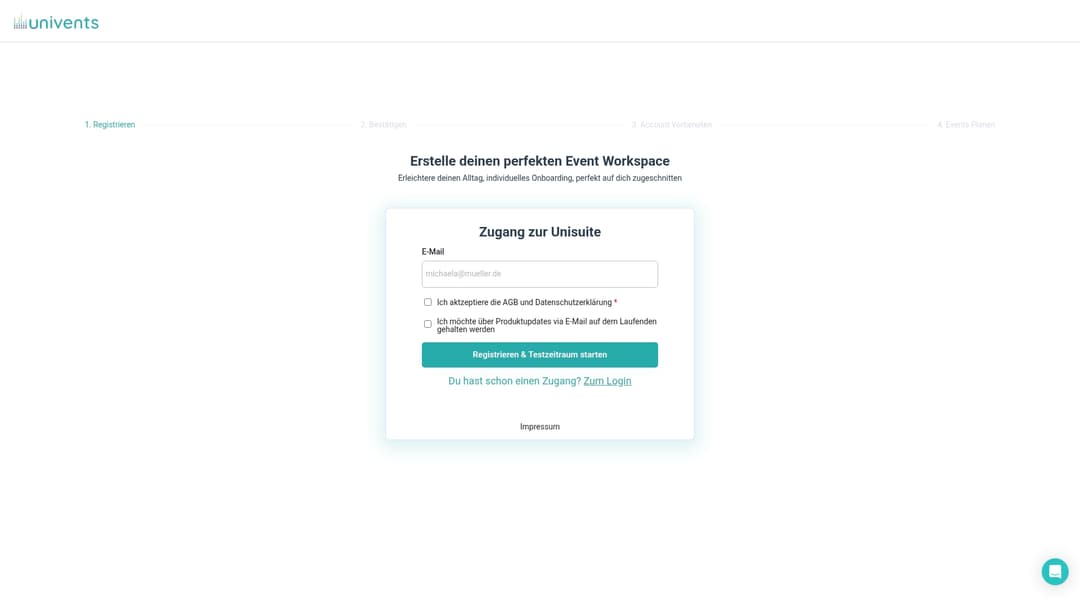
Univents.app is built exactly for this. As a central event management software for optimal planning, the platform brings together all the relevant functions: quote creation, booking management, resource planning, production lists, staff scheduling, and invoicing, all in one system. For event planners and caterers, that means less manual work, fewer communication errors, and more time for what really matters. With built-in communication and CRM features for events, you keep every customer inquiry, quote, and agreement in view, no matter how many events are running in parallel.
Frequently Asked Questions About Event Venues
Which Type of Venue Is Best for Professional Networking Events?
Urban lofts, design hotel bars, and rooftop terraces are especially popular for networking events because they create a relaxed, inspiring atmosphere that naturally encourages conversation.
What Should You Watch Out for With Hybrid Venues?
Hybrid venues combine classic and innovative spaces, so they require careful, differentiated evaluation — especially of streaming infrastructure, acoustics, and flexible room layouts.
Are Classic Event Venues More Expensive Than Innovative Spaces?
Pricing and service scope vary considerably from venue to venue. Classic venues aren't automatically more expensive — they often include more built-in amenities, while innovative spaces tend to come with extra infrastructure costs.
How Do I Find a Suitable Venue Last-Minute?
Use digital booking systems and central platforms to filter available spaces on short notice and request them directly. Many venues have last-minute cancellations that open up availability but are only visible through digital channels.
Further Reading
- Event Venue Software for Easy Room & Event Planning | Univents
- Effortless Event Planning | Automation & Transparency | Univents
- The Best Templates for Event Quotes: Efficient and Error-Free
- Event Planning Guide: The Efficient Path to a Successful Event