

More than 65 percent of events today rely on professional catering for a memorable experience. Whether it's a corporate party, a wedding, or a private celebration, the right mix of buffet, finger food, and drinks determines how happy your guests are. With smart planning and fresh ideas, you can cut effort and cost while still creating standout culinary moments.
Table of Contents
- Classic Buffet: Selection and Costing
- Finger Food Options for Standing Receptions
- Themed Menu Ideas for Special Occasions
- Vegetarian and Vegan Catering Options
- Structuring Smart Drink Packages
- Live Cooking Stations as an Event Highlight
- Digital Quote Management and Automation with Software
Quick Overview
| Key Point | Explanation |
|---|---|
| 1. Diverse menu design | Plan a balanced mix of starters, main courses, and desserts for your buffet. |
| 2. Precise quantity planning | Budget 150-200 grams of food per person and add a 10-15% buffer. |
| 3. Creativity with finger food | Offer a mix of cold and hot finger food in bite-sized portions. |
| 4. Use themed buffets | Design themed menus for special occasions to elevate the culinary experience. |
| 5. Use digital planning tools | Use digital solutions to automate and improve quote management. |
1. Classic Buffet: Selection and Costing
A classic buffet is more than just a collection of dishes — it's a culinary journey that takes your guests through different flavor worlds. When you plan one, you need more than variety: you also need precise resource planning for catering.
The foundation of a successful buffet is a well-thought-out menu. Take a cue from catering experts, who recommend a balanced mix of starters, main courses, and desserts. A good rule of thumb is to plan at least three to four different dishes per person.
Key components of a classic buffet:
- Starters: Light salads, antipasti, or small bites
- Hot main courses: A mix of meat, fish, and vegetarian options
- Desserts: 2-3 sweet options for a satisfying finish
Costing determines whether your buffet is profitable. Factor in not just food costs but also staff time, decoration, and logistics. A professional quote creation process for caterers helps you capture every cost accurately.
Tip: Plan for about 150-200 grams of food per person and build in a 10-15% buffer for extra guests or bigger appetites. That way nobody goes hungry, and you still keep costs under control.
2. Finger Food Options for Standing Receptions
Standing receptions call for small culinary gems that are both practical and delicious. Finger food is the perfect solution for events where guests want to move around freely while still enjoying great food. Planning menus like this takes creativity and strategic thinking.
Core principles for great finger food:
- Easy to eat without cutlery
- Bite-sized portions
- A variety of flavors
- Attractive visual presentation
When putting together your selection, aim for a balanced mix. Classic combinations like melon wrapped in Italian prosciutto pair perfectly with vegetarian options. Plan for about 6 to 8 bites per person.
Recommended finger food categories:
- Cold bites
- Warm mini snacks
- Vegan options
- Small desserts
As you digitize your catering operations, pay close attention to exact quantity planning. A digital tool helps you calculate portion sizes and guest counts precisely and cuts down on waste.
Tip: Aim for a balanced mix of light and filling finger food options. The right balance is what turns an ordinary standing reception into a memorable one.
3. Themed Menu Ideas for Special Occasions
Special occasions deserve more than an ordinary menu. Themed buffets create a unique culinary experience that stays with your guests long after the event. Planning catering booking processes like this takes both creativity and structure.
Core principles for themed menus:
- Authentic flavor experiences
- Decor and cuisine that match
- Cultural context taken into account
- Flexible adaptation to guest preferences
Popular themed buffet ideas:
- Mediterranean cuisine: Italian and Greek specialties with fresh herbs
- Bavarian specialties: Hearty dishes with traditional elements
- International travel themes: Culinary journeys through different countries
- Seasonal buffets: Dishes based on the season and local produce
Use catering software solutions to plan and execute with precision. This helps you calculate exact quantities and coordinate everything smoothly.
Tip: Share the theme with your guests ahead of time. A well-timed heads-up builds anticipation and raises expectations.
4. Vegetarian and Vegan Catering Options
The days of a plain salad plate are over. Vegetarian and vegan catering options today are diverse, creative, and genuinely delicious. When you handle resource planning for catering, you need to account for modern plant-based food trends.
Strategies for vegetarian menu planning:
- High-quality plant-based protein sources
- Creative preparation methods
- Visually appealing dishes
- Balanced nutrition
Recommended vegetarian main courses:
- Mediterranean vegetable tarts
- Stuffed portobello mushrooms
- Quinoa bowls with roasted vegetables
- Middle Eastern falafel variations
Future trends in catering make it clear: plant-based food is no longer a niche. It's a must for modern events.
Tip: Flag allergens clearly and label your dishes. A thoughtfully designed menu wins over vegetarian and non-vegetarian guests alike.
5. Structuring Smart Drink Packages
Drink packages are more than just a line on the invoice. They're a strategic tool for guest satisfaction and cost control. Wedding buffet planning in particular calls for both creativity and precision.
Core principles for effective drink packages:
- Clear drink categories
- Flexible quantity tiers
- Transparent pricing
- Accounting for different guest preferences
Recommended drink categories:
- Non-alcoholic beverages
- Soft drinks
- Beer and wine
- Cocktails and mixed drinks
Use resource planning for catering to optimize your drink selection and quantity planning.
Tip: Budget about 0.5 liters per person per hour, and build in a 10-15% buffer. That way you avoid running short and come across as well-prepared.
6. Live Cooking Stations as an Event Highlight
Live cooking stations turn ordinary catering into an interactive culinary experience. They give guests more than a meal — they give them entertainment. When it comes to event management planning, you need to use this dynamic element strategically.
Benefits of live cooking stations:
- Fresh preparation right in front of guests
- Interactive entertainment
- Room for individual customization
- Full transparency in preparation
Recommended live cooking concepts:
- Pasta station with fresh ingredients
- Grill station with a range of meat and vegetable options
- Wok station with Asian dishes
- Dessert creation station
The benefits of an event management system help you plan complex stations like these efficiently.
Tip: Plan enough space and staff for live cooking. A well-run station becomes the talk of the evening.
7. Digital Quote Management and Automation with Software
Digital transformation in the catering industry is more than a technical upgrade. It's a strategic necessity for businesses that want to stay competitive. Efficient approaches to event management show exactly where this potential lies.
Core benefits of digital quote management:
- Fewer errors when creating quotes
- Time saved through automation
- Transparent documentation
- Faster communication with clients
Key areas to automate:
- Generating quote templates
- Price calculations
- Handling customer inquiries
- Invoicing
Using cloud solutions for event agencies lets you integrate different business processes seamlessly. Tools like Univents' free catering quote generator make it easy to put together a professional, itemized quote in minutes — no spreadsheet required.
Tip: Invest in software that maps to your specific catering workflows. The right technology can boost your productivity by up to 40 percent.
The table below summarizes the article's main points and strategies across different catering options and planning approaches.
| Topic | Description | Key Aspects |
|---|---|---|
| Classic Buffet | A culinary journey through different dishes. | Variety, resource costing, menu planning |
| Finger Food Options | Practical, flavorful bites for standing receptions. | Easy handling, flavor variety, visual presentation |
| Themed Menus | Special buffets for unique occasions. | Authenticity, cultural context, seasonal adaptation |
| Vegetarian Options | Modern plant-based food trends. | High-quality protein, creative preparation, nutritional balance |
| Drink Packages | A strategic tool for cost control. | Categorization, quantity tiers, pricing |
| Live Cooking Stations | Interactive, freshly prepared food. | Entertainment, transparency, customization |
| Digital Quote Management | Boosting efficiency through technology. | Automation, time savings, error-free communication |
Making Catering Quotes Work for Your Next Event
Planning a varied catering offer can be complex and time-consuming. As the examples above show, precise resource planning and structured quote management make all the difference. Many organizers and caterers struggle with costing buffets, finger food options, and drink packages while still accommodating individual requests. That's exactly where Univents.app comes in — a complete SaaS platform that brings every step together digitally and automates the process.
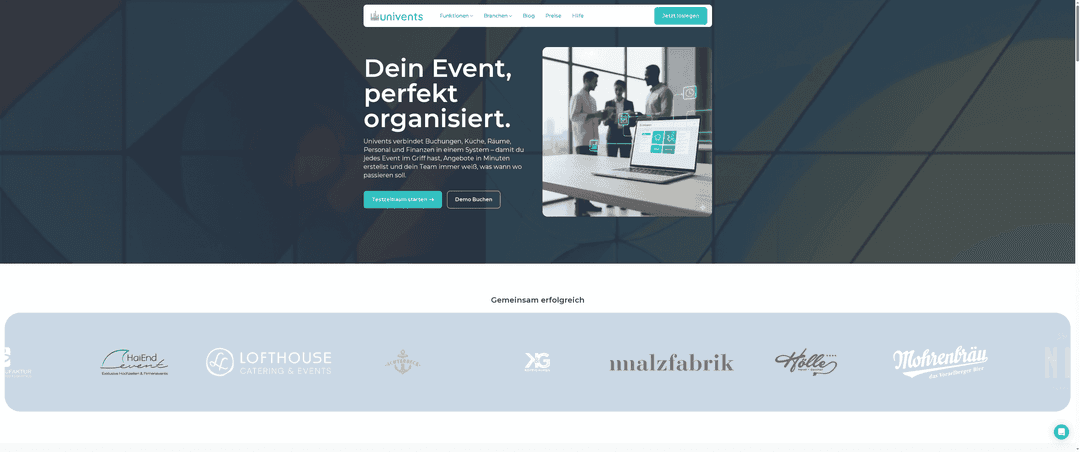
Take advantage of digital tools for quote creation, automatic quantity planning, and seamless coordination of live cooking stations and special menus. Turn challenges into opportunities and impress your clients with professionally organized events. Get started today at https://univents.app and take your catering business to the next level. See how simpler processes and smart software can cut your working hours and drive better results.
Frequently Asked Questions
What are practical examples of catering offers for events?
Practical examples of catering offers include buffets, finger food, live cooking stations, and themed menus. These options deliver different flavor experiences and adapt to a wide range of event formats.
How do I plan the amount of food for a catering offer?
Plan for about 150-200 grams of food per person and build in a 10-15% buffer. That way your guests stay satisfied, and you avoid unnecessary food waste.
Which drinks should I include in my catering offer?
Include a selection of non-alcoholic drinks, soft drinks, beer, and wine. A standard rule of thumb is to plan for about 0.5 liters of drinks per person per hour to avoid running short.
How do I design a themed menu for my event?
Pick a specific theme, such as international cuisine or seasonal produce, and adapt your dishes to match it. Make sure the decor and presentation fit the theme as well.
What are the benefits of live cooking stations at events?
Live cooking stations offer fresh preparation right in front of guests and create an interactive atmosphere. Plan enough space and staff to run these stations successfully and make the most of the experience.
How can I automate quote management for my catering business?
Automate quote management by building templates for quotes and price calculations. This speeds up the process and reduces errors, which can save you up to 40% of your time.
Recommended Reading
- Plan smarter, sell better: future trends for event and catering businesses
- Quote Creation Guide for Caterers: Efficient and Error-Free
- 8 Best Catering Services Software Solutions in 2025
- Catering Resource Planning: An Efficient Step-by-Step Guide
- What Is Thai Catering? Complete Guide for Las Vegas
See how Univents works specifically for your industry – with all features, examples and pricing at a glance.
Catering Software