

Surprisingly many event planners underestimate the work that goes into accurate event budget planning. Even small mistakes can create major financial gaps. If you track every expense from the start, you save money and gain real planning confidence for your event. This guide shows you, step by step, how to calculate your event costs realistically with modern tools while spotting savings opportunities along the way.
Table of Contents
- Step 1: Identify All Expected Event Costs
- Step 2: Define a Realistic Budget Based on Your Goals
- Step 3: Use Digital Tools to Monitor Costs
- Step 4: Optimize Spending with Targeted Adjustments
- Step 5: Review Profitability and Document Your Results
Quick Summary
| Key Point | Explanation |
|---|---|
| 1. Complete Cost Planning | Capture every potential cost across categories like marketing, technical equipment, and catering. |
| 2. Realistic Budget Definition | Define clear goals and assign a budget range to each one. |
| 3. Use of Digital Tools | Use digital tools for effective cost management and budget control. |
| 4. Strategic Cost Optimization | Identify savings opportunities and optimize spending without sacrificing quality. |
| 5. Review and Document Profitability | Analyze costs and revenue, and document results to improve future events. |
Step 1: Identify All Expected Event Costs
When planning an event budget, you need to systematically capture every potential cost. According to WordPress OEH FH Salzburg, complete cost planning covers categories such as marketing, decoration, technical equipment, catering, staffing, and incidental expenses.
Start with a detailed breakdown of your expenses. Sort your costs into main categories: infrastructure, staffing, marketing, logistics, and technical equipment. For each category, list specific line items and research precise prices from vendors or past events. Our free event budget calculator is a quick way to get a first estimate before you start collecting vendor quotes. Grundwissen Eventmanagement recommends dynamic financial planning that stays active from the planning phase all the way through the post-event review.
Heads up: don't forget to budget buffer costs for unexpected expenses. A good rule of thumb is to set aside 10-15% of your budget as a reserve.
 This protects you from financial surprises and gives you flexibility while running the event.
Step 2: Define a Realistic Budget Based on Your Goals
A realistic event budget starts with clearly defined goals. According to the HSLU conference proceedings, modern companies can build more accurate budgets by using algorithm-based models and predictive analytics.
Start by analyzing your event goals in detail. Distinguish between primary goals — such as revenue growth, brand visibility, or customer retention — and secondary goals. Assign a realistic budget range to each goal, taking into account factors like expected attendance, target audience, and workload.
Heads up: avoid wishful thinking when planning your budget. Be honest with yourself and base your decisions on real data and past experience. An overly ambitious budget can quickly lead to cash flow problems.
Step 3: Use Digital Tools to Monitor Costs
Hagel-IT shows in an analysis how digital tools can help companies monitor and optimize event costs efficiently. With the right technology, you can significantly improve — and more precisely control — your budget oversight.
Choose a digital tool that covers your specific budgeting needs. Look for features like real-time cost tracking, automatic spending alerts, and detailed financial reports. Event Management Software 2025 can help you manage and control every financial aspect of your event in one central place.
Heads up: invest time in training your team on the new tool. Inadequate training can seriously hurt the effectiveness of your cost monitoring. Plan enough onboarding time and roll the tool out systematically.
Step 4: Optimize Spending with Targeted Adjustments
Optimizing event spending takes a strategic, flexible approach. Use your digitized cost data to identify savings opportunities and make targeted budget adjustments. Digitizing Catering offers useful insights into making your processes more efficient.
Analyze your spending categories in detail and look for ways to optimize. Compare prices between different vendors, negotiate terms, and check whether bulk orders or long-term contracts work out cheaper. Focus on the areas with the biggest savings potential, such as catering, technical equipment, and logistics.
Heads up: don't cut costs in the wrong places. Reducing spending should never compromise the quality of your event. Prioritize savings that don't affect the overall experience or your event goals.
Step 5: Review Profitability and Document Your Results
AFS Akademie stresses how important it is to systematically review your event's profitability. Compare your actual costs and revenue against your original budget to assess the financial success of your event. 7 Benefits of an Event Management System can help you run this analysis efficiently.
According to the CARF Lucerne 2024 conference proceedings, you should use predictive analytics and scenario planning to document your results. Put together a detailed closing report that covers metrics like revenue, cost efficiency, attendee satisfaction, and goal achievement.
Heads up: documentation is more than a list of numbers. Critically reflect on your strategies and identify concrete areas for improvement in future events. An honest, constructive analysis is the key to continuous improvement.
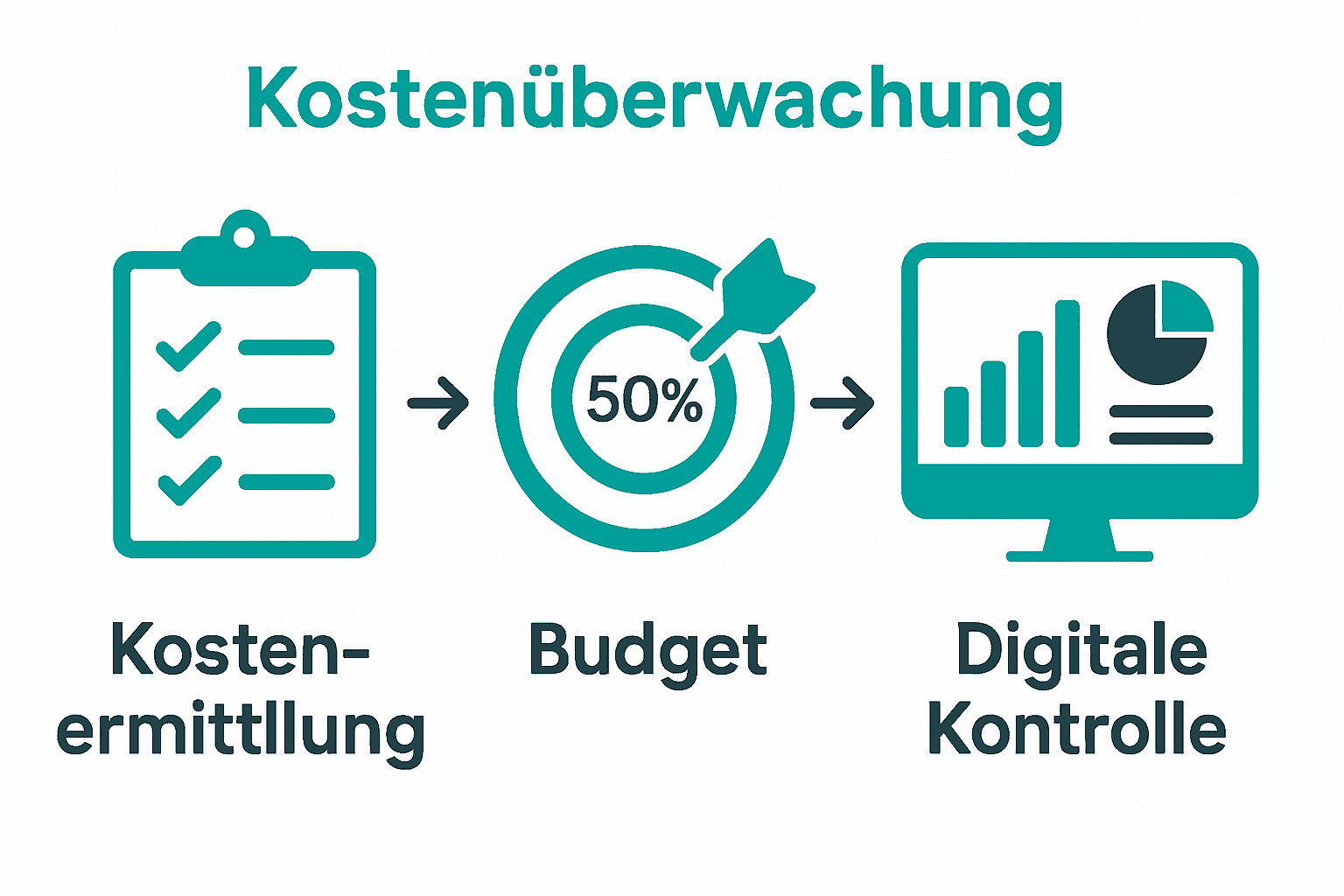
Master Efficient Event Budget Planning with Univents.app
Event budget planning is often a challenge full of unknowns and hidden costs. If you want to track every expense the way this guide describes — and improve your cost control with digital support — Univents.app is the tool for the job. With features like real-time expense tracking, automated production lists, and integrated financial planning, you can monitor your event costs precisely and adjust them on the fly. That way you always stay on top of things and can stick to your budget without the stress.
Get started with Univents today and streamline your event planning with intelligent process automation. Say goodbye to manual spreadsheets and unexpected cost traps. See the benefits of our platform for yourself and take your events to the next level with Univents.app. Make your budget planning more sustainable and efficient — visit our website now.
Frequently Asked Questions
How do I capture all the costs for my event?
To capture all your event costs, sort them into main categories such as infrastructure, staffing, marketing, logistics, and technical equipment. List specific line items for each category and research current prices. Start building a detailed cost breakdown right away, and update it as you get real vendor quotes.
How do I set a realistic budget for my event?
A realistic budget starts with clearly defined goals. Assign a budget range to each goal and factor in things like expected attendance and target audience. Set concrete goals, then validate your budget plan against real data and past events rather than guesswork.
Which digital tools help with cost monitoring?
Digital cost-monitoring tools offer features like real-time cost tracking and automatic spending alerts. Choose a tool that fits your specific budgeting needs, and invest time in training your team so you get the most out of it from day one.
How can I optimize my event spending?
Optimize your event spending by analyzing your detailed cost data and identifying savings opportunities. Compare prices across vendors and negotiate terms to lower your costs long-term. Look specifically for savings in areas like catering and technical equipment.
How do I check the profitability of my event?
To check your event's profitability, compare your actual costs and revenue against your budget plan. Put together a closing report covering metrics like revenue and goal achievement. Start by carefully documenting your financial results and identifying ways to improve next time.
Why is it important to plan for buffer costs?
Planning for buffer costs matters because it protects you against unexpected expenses. A good rule of thumb is setting aside 10-15% of your budget as a reserve to avoid financial surprises during the event. Build this buffer into your budget plan from the start so you stay flexible when things change.
Recommended Reading
- Catering Resource Planning: An Efficient Step-by-Step Guide
- Event Management Software for Agencies & Teams | Univents
- 7 Benefits of an Event Management System
- Simple Event Planning | Automation & Transparency | Univents
- Hochzeitsplanung: Alles, Was Sie Wissen Müssen - Top DJ München
- Kostenfaktoren Baumarbeiten: Umfassender Leitfaden Schweiz - SPEZ AG - Spezialist im grünen Bereich