

Event coordination includes budget management, vendor and staff coordination, safety and risk management, liaison with authorities and venues, real-time on-site communication, and post-event evaluation. More than 80% of events fail because of unclear workflows or poor coordination — which is exactly why getting these tasks right determines whether an event runs smoothly, stays safe, and ultimately succeeds. This guide breaks down what event coordination really covers and how modern tools make teamwork easier.
Table of Contents
- Definition and Core Tasks of Event Coordination
- Process and Core Stages of Event Management
- Technology Tools and Automation Options
- Responsibilities, Legal and Financial Obligations
- Common Pitfalls and Best Practices for Providers
Key Takeaways
| Point | Details |
|---|---|
| Event coordination requires a broad skill set | Alongside technical knowledge, soft skills like communication and creativity are critical to success. |
| Technology support is essential | Event management systems streamline processes and enable efficient resource planning. |
| Legal and financial responsibility is central | Precise calculations and compliance with legal requirements are key to long-term success. |
| Precision and clear communication are key | Clear task allocation and early planning help avoid mistakes in event management. |
Definition and Core Tasks of Event Coordination
Event coordination is a complex management discipline that covers the strategic and operational planning, organizing, and steering of events. According to studysmarter.de, event coordinators are responsible for planning, managing, and executing events. That includes demanding tasks such as budget management, vendor negotiations, and making sure every component of the event works together smoothly.
The core tasks of event coordination fall into several key areas. According to Wikipedia, these include in particular:
- Safety management: ensuring safety for staff, performers, and guests
- Authority liaison: close coordination with the relevant authorities
- Organizer representation: taking on legal and organizational responsibility
Successful event coordination depends on more than technical skills — soft skills such as communication, creativity, and organizational talent are just as critical. Event communication plays a central role here, coordinating everyone involved effectively and keeping things running smoothly.
The complexity of the role increasingly calls for digital support.
 Modern event management systems help coordinators automate processes, plan resources, and stay on top of every detail. A strategic approach that combines technology with human expertise is the key to successful events.
Process and Core Stages of Event Management
Event management is a structured process that requires careful planning and execution. According to monami.hs-mittweida.de, the process breaks down into five key phases: concept, planning, organization, execution, and follow-up. These phases form the backbone of every successful event.
In the concept phase, event managers develop the underlying strategy. This includes:
- Defining the event goals
- Creating a detailed concept plan
- Budgeting
- Defining the program details
The planning phase builds on this groundwork with concrete steps such as putting together the team, developing the strategy, and setting precise goals. The benefits of an event management system can help streamline these processes and make them more efficient.
During the execution phase, the event is carried out according to plan. An example from academyofsports.net shows a typical run-of-show structure: from the welcome through presentations to catering slots. Every item on the program is assigned to a specific room and specific people.
The follow-up phase is essential for continuous improvement. This is where documentation, teardown, and a critical review of the event happen. Modern event management systems support this process with digital analytics tools that generate insights for future events.
Technology Tools and Automation Options
Modern event coordination is hard to imagine without technical support. According to planungstafel.com, visual planning tools play a central role in efficiently coordinating workflows, stakeholders, resources, and schedules — enabling events to run smoothly.
Modern automation solutions cover several core functions:
- Digital resource planning
- Real-time communication channels
- Automated documentation systems
- Smart budget management
One particularly interesting technological approach is Complex Event Processing (CEP). Wikipedia describes CEP as a field of computer science that processes interdependent events in real time, deriving complex situations from simple ones.
For event managers, event management software solutions today offer comprehensive ways to optimize processes. These systems bring communication, planning, resource management, and follow-up together on one central platform. The benefits are obvious: less manual work, more transparency, and noticeably more efficient workflows.
The future of event management lies in intelligently combining human expertise with technological support. Automated systems take over routine tasks, freeing event managers to focus on the creative and strategic side of the job.
Responsibilities, Legal and Financial Obligations
Event coordination carries substantial legal and financial responsibility. According to Wikipedia, under Section 38 of Germany's model assembly-venue ordinance (Muster-Versammlungsstättenverordnung), the person in charge of an event has far-reaching authority to take action in an emergency — including pausing or cancelling the event.
Core legal responsibilities include:
- Representing the organizer
- Working with authorities
- Ensuring safety for staff, performers, and guests
- Complying with legal requirements and regulations
The financial side is just as critical. IST emphasizes the importance of precise cost calculation, covering third-party costs like technology and catering as well as the agency's own overhead. Binding timelines and budget targets must be tracked exactly.
Cloud solutions for event agencies can significantly help event managers meet their legal and financial obligations. Modern software helps fulfil documentation requirements, monitor budgets, and minimize legal risk.
The bottom line: professional event management takes more than creative skill — it requires a high degree of legal and financial diligence too. Only by taking every responsibility seriously can you build long-term success and trust in the industry.

Common Pitfalls and Best Practices for Providers
Event management demands precision and a professional approach. According to monami.hs-mittweida.de, it's essential that every team member has a clearly defined, fixed responsibility to avoid misunderstandings and overlapping duties.
Common sources of error in event management include:
- Unclear task allocation
- Poor communication
- Inadequate budget planning
- Missing contingency plans
- Inefficient scheduling
Budget calculation is a critical area. IST stresses the importance of precise cost tracking, including both third-party and internal costs, plus binding timelines. To minimize errors, experts recommend transparent, detailed financial planning.
Digitizing catering can help solve many of these challenges. Modern digital tools enable central coordination, reduce manual error sources, and boost overall efficiency.
Best practices for event providers come down to a proactive mindset: clear communication, early planning, flexible adaptability, and continuous learning. Only those willing to learn from experience and keep refining their processes can secure long-term success in the fast-moving world of event management.
Master Event Coordination Effortlessly with Univents.app
The complex demands of event coordination often put event managers under enormous pressure. If you want to coordinate safety management, budget planning, and authority liaison efficiently, but keep losing too much time to manual tasks, you're not alone. The growing need for digital support and automation is unmistakable. Univents.app gives you a comprehensive SaaS platform that brings all these challenges together and noticeably lightens your workflow, from planning through to follow-up.
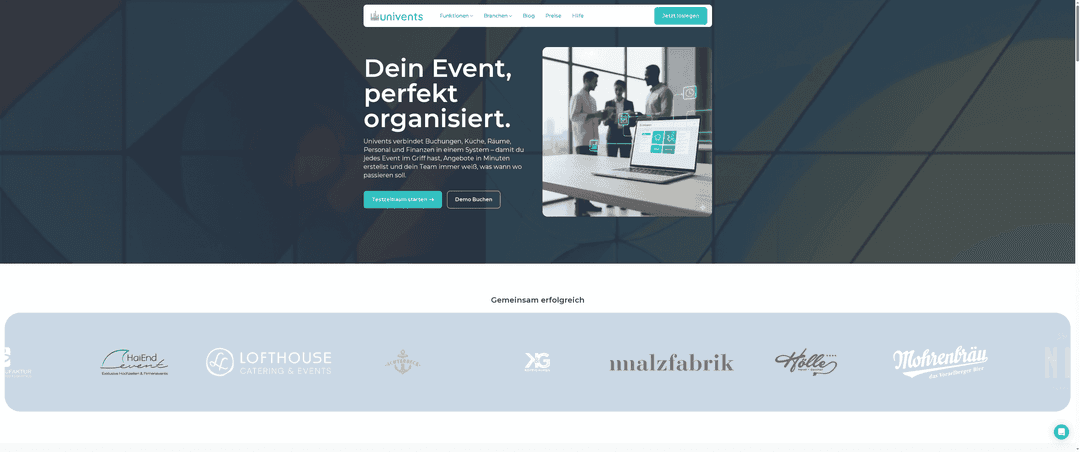
See for yourself how Univents.app lets you centralize and automate your event processes. From resource planning to digital quotes and contracts to real-time communication with clients and partners — our system delivers clear structure and fewer error sources. Get started now and benefit from an integrated solution that doesn't just simplify your work, but also lets you focus on what matters most: an unforgettable event. Explore what we offer and transform your event coordination today.
Learn more about cloud solutions for event agencies, and discover the future of professional event management with event management software.
Frequently Asked Questions
What are the core tasks of event coordination?
The core tasks include safety management, liaising with authorities, and representing the organizer, along with planning and executing the event itself.
What phases does the event management process include?
The event management process consists of five phases: concept, planning, organization, execution, and follow-up.
What role do technical tools play in event coordination?
Technical tools such as event management systems support planning, resource management, and communication. They enable digital process automation and boost overall efficiency.
How can common mistakes in event management be avoided?
To avoid these mistakes, put clear task allocation, regular communication, and precise budget planning in place. Flexible adaptability and ongoing learning matter too.
Recommended Reading
- Effortless Event Planning | Automation & Transparency | Univents
- Event Hub for Efficient Event Planning & Communication | Univents
- Plan smarter, sell better: future trends for event and catering businesses
- Event Management Software for Agencies & Teams | Univents
- Live Band Booking Guide for Corporate Events Success – Oompah Band