


More than 60 percent of event companies in Germany now rely on digital invoicing. The shift from paper to electronic formats such as XRechnung or ZUGFeRD not only speeds up workflows but also reduces errors and increases transparency throughout the entire process. Event organizers who want to operate in a legally compliant, efficient, and internationally competitive way will find out here what really matters when making the switch.
Table of Contents
- What Digital Invoicing Means for Events
- Legal Requirements and International Differences
- How Digital Invoicing Processes Work
- Common Challenges for Event Providers
- Costs, Risks, and Sources of Error in Digitalization
Key Takeaways
| Point | Details |
|---|---|
| Digital invoicing improves efficiency | Switching to digital formats such as XRechnung and ZUGFeRD reduces manual data entry time and speeds up the invoicing process. |
| Legal frameworks require adjustments | Event companies must adapt to internationally varying legal requirements to ensure legal compliance. |
| Integration and training are essential | Successful digital invoicing processes require the technical integration of various systems and comprehensive staff training. |
| Costs and risks must be managed | Introducing digital solutions initially involves higher costs, but the long-term savings and efficiency gains outweigh them. |
What Digital Invoicing Means for Events
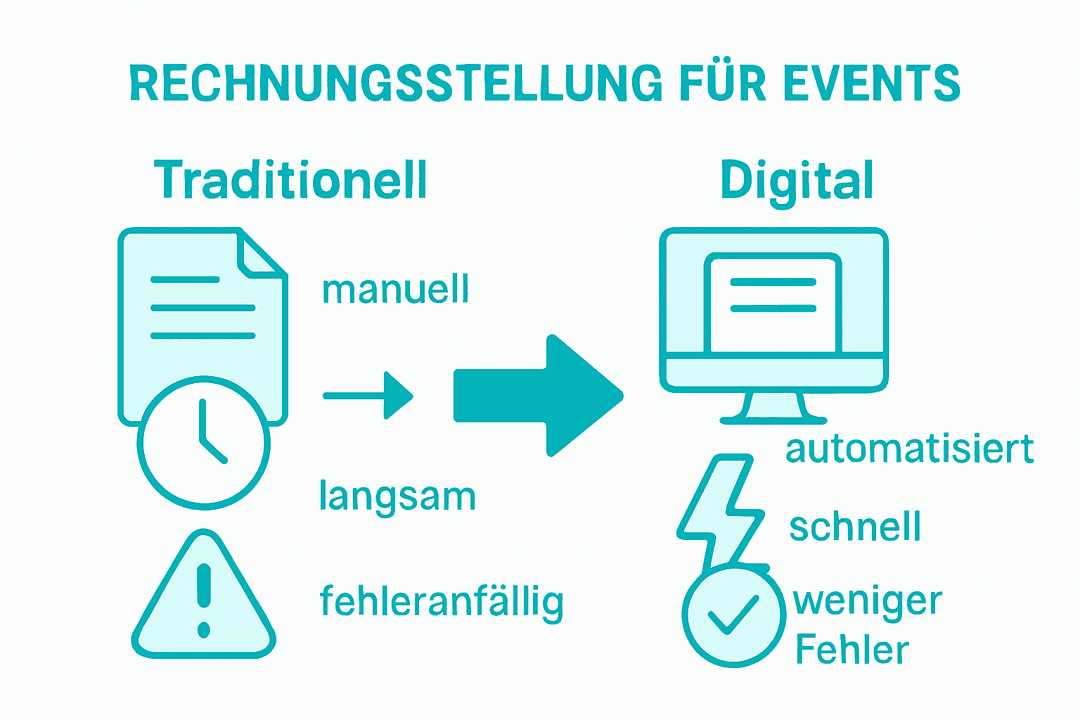
Digital invoicing in the event business means handling the entire invoicing process electronically. It replaces traditional paper invoices with modern, digital formats such as XRechnung and ZUGFeRD, which enable fast, automated processing.
Digital invoice formats differ fundamentally from traditional methods. They embed machine-readable XML data directly into PDF documents, guaranteeing efficient further processing. ZUGFeRD formats, for example, combine human-readable layouts with technical metadata that simplify automated accounting processing.
For event companies, this technology offers key advantages:
- A drastic reduction in manual data entry time
- Fewer errors thanks to automated data transfer
- Faster invoicing and payment receipt
- Improved documentation and archiving
Digital invoicing doesn't just transform administrative processes — it also creates greater transparency and efficiency across the entire event management workflow. It allows companies to focus on their core competencies and use resources strategically.
Legal Requirements and International Differences
Digital invoicing is subject to complex legal frameworks that vary considerably from country to country. While some countries have already introduced binding regulations, others are still developing their legal standards. In Spain, for example, electronic invoices are becoming mandatory for companies with revenue above 8 million euros, illustrating the growing trend toward international regulation.
Legal challenges vary by region and industry. Event companies therefore need to consider not only technical but also legal aspects. Key differences include:
- The mandatory status of electronic invoice formats
- Requirements for digital signatures
- Retention periods and documentation obligations
- Tax recognition of electronic receipts
For international events, this means developing invoicing systems that are flexible and compatible across borders. Modern software solutions must meet a range of legal standards while still ensuring consistent, transparent documentation.
Digitizing invoicing therefore requires not only technological expertise but also a deep understanding of legal nuances. Companies that tackle these challenges proactively can gain a competitive edge and strengthen their international competitiveness.
How Digital Invoicing Processes Work
The digital invoicing process is based on modern technologies that automate the entire invoicing workflow. XRechnung is an XML-based data model that has revolutionized the standardized exchange of invoice data, enabling companies to manage complex billing processes efficiently.
Digital invoice processing involves several key stages:
- Automatic invoice generation
- Digital signature and validation
- Electronic transmission
- Automated booking processes
- Integrated payment tracking
Electronic Bill Presentment and Payment (EBPP) is a comprehensive system that digitizes the entire invoicing process from creation to payment. This technology enables event companies to invoice transparently, quickly, and without errors.
The key lies in seamlessly integrating different software systems. Modern quote creation for caterers connects invoicing, customer management, and accounting into one continuous digital process chain. This minimizes manual data entry, reduces error rates, and boosts the company's overall efficiency.

Common Challenges for Event Providers
Event providers face complex challenges when it comes to digital invoicing that go far beyond technical implementation. The transformation requires not only technological adjustments but also fundamental changes to business processes.
Key challenges in digital invoicing include:
- Technical compatibility between different software systems
- Integrating existing accounting systems
- Training staff on new digital workflows
- Ensuring data protection compliance
- Overcoming resistance to change
Cloud solutions for event agencies offer a strategic approach to overcoming these challenges. They enable flexible, scalable systems that support a gradual digital transformation.
The core skill lies in aligning technological possibilities with business goals. Only companies that approach digital transformation proactively and holistically can fully capture the opportunities of electronic invoicing and secure their competitiveness in the long run.
Costs, Risks, and Sources of Error in Digitalization
Switching to electronic invoices is a complex transformation that requires both financial investment and strategic adjustments. While the initial costs may seem daunting at first, the long-term efficiency gains and process improvements outweigh them.
Key cost factors in digital invoicing include:
- Purchasing new software solutions
- Staff training
- Technical infrastructure adjustments
- Data migration and integration
- Potential consulting costs
Introducing electronic invoicing systems carries specific risks that need to be carefully managed. Common sources of error include insufficient system compatibility, inadequate staff training, and data protection challenges.
Efficient ways to boost efficiency can help minimize these risks. What matters most is a step-by-step, well-planned implementation that aligns technological possibilities with business goals.
Efficient Digital Invoicing for Event Providers with Univents
Digital invoicing in the event business presents many event providers with major challenges, such as technical compatibility, error-free automation, and compliance with legal requirements. If you want to reduce the time spent and the error rate in accounting while relying on a seamlessly integrated system, Univents is here to help. Our all-in-one platform offers a central solution for automatic invoice creation, digital signatures, and fast payment processing — built specifically for event agencies, caterers, and venues.
With Univents, you benefit from:
- Automated workflows that eliminate manual processes
- Digital integration from quotes all the way to the final invoice
- Real-time visibility into your finances and event planning
Get started with Univents today and turn digital invoicing into an efficiency advantage for your business. Visit https://univents.app and see how to digitize your processes securely, quickly, and in full legal compliance. Don't waste time on complicated standalone tools — seize the opportunity for growth and scalability with state-of-the-art event software.
For more insights into quote and production planning for caterers, check out our article on quote creation for caterers. Discover the complete workflow — from planning all the way to digital invoicing!
Frequently Asked Questions
What is digital invoicing in the event business?
Digital invoicing in the event business involves handling invoicing processes electronically, replacing traditional paper invoices with digital formats such as XRechnung and ZUGFeRD.
What benefits does digital invoicing offer event companies?
The benefits include a drastic reduction in manual data entry time, fewer errors, faster invoicing, quicker payment receipt, and improved documentation and archiving.
What legal requirements apply to digital invoicing?
Digital invoicing is subject to various legal frameworks, including the mandatory status of electronic invoice formats, requirements for digital signatures, and retention periods. These requirements can vary by region.
What are common challenges with digital invoicing?
Common challenges include technical compatibility between different software systems, integrating existing accounting systems, training staff, ensuring data protection compliance, and overcoming resistance to change.
Recommended Reading
- 7 proven ways to boost efficiency in event management
- Event Management Software 2025: Comparison, Features & Buying Guide
- Cloud solutions for event agencies: the complete guide
- 7 advantages of an event management system
- DJ for Corporate Events Munich – Your Event DJ for Businesses