

Over 80% of event organizers are looking for flexible catering solutions that both delight guests and simplify planning. At events across major cities, the concept you choose shapes the guest experience more than almost any other decision. From buffets to flying buffets to sustainable alternatives, here's how modern catering trends bring together comfort, efficiency and individuality.
Table of Contents
- Buffet Concept: A Flexible Self-Service Solution
- Flying Buffet: Bite-Sized Food for Mobile Events
- Plated Service: Individual Courses at the Table
- Food Stations: Interactive Themed Islands
- Street Food Concept: Modern Event Cuisine
- Business Catering: Efficient Catering for Corporate Events
- Sustainable Catering: An Eco-Friendly Approach
Quick Summary
| Key Takeaway | Explanation |
|---|---|
| 1. Flexibility through buffet concepts | Buffets give guests individual choice and require less staff, which makes them cost-efficient. |
| 2. Interactivity with the flying buffet | Small bites let guests stay mobile and interact, ideal for dynamic events. |
| 3. Professional plated service | Courses served at the table create an exclusive experience and require tight planning and staffing. |
| 4. Food variety through food stations | Themed stations offer interactivity and an individual dining experience with plenty of choice. |
| 5. Sustainability in catering | Eco-friendly practices like regional sourcing and waste reduction are essential for modern catering strategies. |
1. Buffet Concept: A Flexible Self-Service Solution
The buffet concept is a modern solution for catering events that puts flexibility and guest comfort front and center. This self-service format lets guests help themselves individually, based on their own taste — which brings real advantages for organizers and guests alike.
With a well-designed buffet, layout and presentation determine success. Dishes should be arranged logically and clearly so guests can find their way quickly. The selection should cover different dietary preferences and include both cold and hot dishes.
For caterers, a well-thought-out buffet means real process optimization in kitchen management. Strategic planning simplifies workflows and puts staff resources to more efficient use. Clear logistics with prepped stations for each food group are key.
The key elements of a successful buffet concept are:
Benefits for organizers:
- Lower staffing requirements
- More flexible food service
- More cost-effective execution
Benefits for guests:
- Individual choice
- Self-directed plate building
- More interaction during the meal
Pro tip: Always plan a buffer for unexpected guest numbers and keep extra portions ready to avoid running short.
2. Flying Buffet: Bite-Sized Food for Mobile Events
The flying buffet is an elegant catering solution for dynamic, mobile events, where serving staff bring small bites and canapés directly to guests. This format is ideal for standing receptions, cocktail parties and networking events, where a traditional buffet would be impractical.
The flying buffet's main advantage is its mobility and interactivity. Guests can move around freely, mingle and enjoy culinary treats at the same time. Dishes are served on trays and range from cold canapés to warm, freshly prepared mini dishes.
For organizers, this concept offers significant advantages. Event management software can dramatically simplify the logistics and planning of mobile catering formats like this one. Portion size and variety let you design the menu flexibly and creatively.
Key elements of the flying buffet:
- Small, bite-sized portions
- A wide range of flavors
- Elegant presentation
- High flexibility
Benefits for organizers:
- Less space required
- Simpler logistics
- More opportunities for interaction
- A modern event feel
Pro tip: Plan at least 6–8 different bites and aim for a balanced mix of vegetarian and meat options so every guest is happy.
3. Plated Service: Individual Courses at the Table
Plated service is the crown discipline of catering: dishes are served individually, course by course, right at the table. This format combines culinary precision with a special experience for guests and works best for upscale events like weddings, corporate functions or exclusive business dinners.
With plated service, each course is served separately and timed to work together. This allows for a controlled sequence and dishes served at the perfect temperature. Chefs can fully express their creativity, and guests enjoy a professionally curated culinary journey.
For caterers, this service format is a logistical challenge. Quote creation becomes more complex, but it also commands greater appreciation and can be priced accordingly.
Core elements of plated service:
- Individual portioning
- Sequential courses
- Professional presentation
- High culinary quality
Benefits for organizers:
- An exclusive dining experience
- Controllable portion sizes
- Greater appreciation for the food
- Better control over timing
Pro tip: Plan enough staff and coordinate closely with the kitchen team beforehand on the sequencing and timing of each course.
4. Food Stations: Interactive Themed Islands
Food stations are a modern catering concept that combines great food with interactivity and experience. These themed cooking islands let guests watch dishes being prepared live — or try their hand at it — for a multi-sensory dining experience.
Each food station focuses on a specific culinary category or theme — international cuisine, grill stations, dessert bars or regional specialties. Guests can move around freely and explore the different stations as they please.
This concept offers real advantages for caterers. Communication tools for caterers can help coordinate and streamline the complex logistics behind interactive dining concepts like this one.
Benefits of food stations:
- High interactivity
- Wide selection
- An individual dining experience
- Built-in entertainment value
Design options:
- Themed stations
- Live cooking
- International cuisines
- Regional specialties
Pro tip: When planning food stations, distribute them evenly around the room and make sure enough staff are available at each one.
5. Street Food Concept: Modern Event Cuisine
The street food concept brings urban food culture straight into event catering, offering a relaxed, authentic way to feed guests. This format combines culinary variety with a laid-back atmosphere and gives guests a dynamic, interactive dining experience.
Street food stands out for its quick preparation, international cuisines and no-frills presentation. Small portions let guests sample several dishes, turning the meal into a social experience.
For caterers, the street food concept is an opportunity for highly flexible production planning. Preparation can happen mostly on-site, adding an extra layer of entertainment.
Core elements of the street food concept:
- International cuisine
- Small portions
- Live preparation
- Urban flair
Benefits for organizers:
- Short setup times
- High flexibility
- An interactive dining experience
- Cost-effective execution
Pro tip: When designing the menu, aim for a balanced mix of different cuisines and keep allergens and vegetarian options in mind.
6. Business Catering: Efficient Catering for Corporate Events
Business catering is a professional food strategy for corporate events, built around efficiency, quality and professionalism. The concept is designed to support company events like conferences, meetings or team events with high-quality food.
What sets business catering apart is precise alignment with a company's specific needs. Factors like timing, dietary preferences and company culture all play a crucial role. Resource planning in catering makes it possible to coordinate all of this professionally.
Core features of business catering:
- Professional presentation
- Flexible menu design
- On-time delivery
- Adaptability
Benefits for companies:
- Time savings
- Increased employee productivity
- A professional image
- Streamlined event logistics
Pro tip: Communicate the event's exact requirements and specifics with the catering team in advance to ensure smooth execution.
7. Sustainable Catering: An Eco-Friendly Approach
Sustainable catering is more than a trend — it's a necessity for responsible businesses in the food industry. This approach combines culinary excellence with environmental protection and social responsibility, transforming traditional catering processes.
The core strategy involves reducing food waste, using regional and seasonal products, and choosing eco-friendly packaging. Resource planning in catering plays a crucial role in making these concepts efficient and sustainable.
Sustainability criteria:
- Regional sourcing
- Minimizing food waste
- Biodegradable packaging
- Lower-carbon products
Benefits of sustainable concepts:
- A positive company reputation
- Cost savings
- Environmental protection
- Greater appeal to customers
Pro tip: Run a precise needs analysis and order only the quantities you actually need to actively cut food waste.
The table below summarizes the different catering concepts and their key features described in this article.
| Concept | Description | Benefits |
|---|---|---|
| Buffet Concept | A flexible self-service solution with cold and hot dishes. | Less staff, individual choice. |
| Flying Buffet | Mobile bites for dynamic events, ideal for standing receptions. | Simple logistics, more interaction. |
| Plated Service | Individually served courses at the table for upscale events. | Exclusive experience, controlled portion size. |
| Food Stations | Interactive themed islands with live cooking and international cuisine. | High interactivity, wide selection. |
| Street Food Concept | Urban food culture with small portions and live preparation. | Flexibility, interactive experience. |
| Business Catering | Efficient catering for corporate events with a professional approach. | Time savings, increased productivity. |
| Sustainable Catering | Eco-conscious execution with regional and seasonal products. | Environmental protection, positive reputation. |
Mastering Catering Concepts Digitally with Univents.app
The seven catering concepts in this article show that flexibility, process optimization and guest satisfaction are the decisive success factors. Whether it's a buffet with low staffing needs or plated service with precise timing, caterers and organizers face the challenge of coordinating many moving parts professionally. This is exactly where Univents.app comes in, supporting you with comprehensive resource and production planning in catering through practical digital tools.
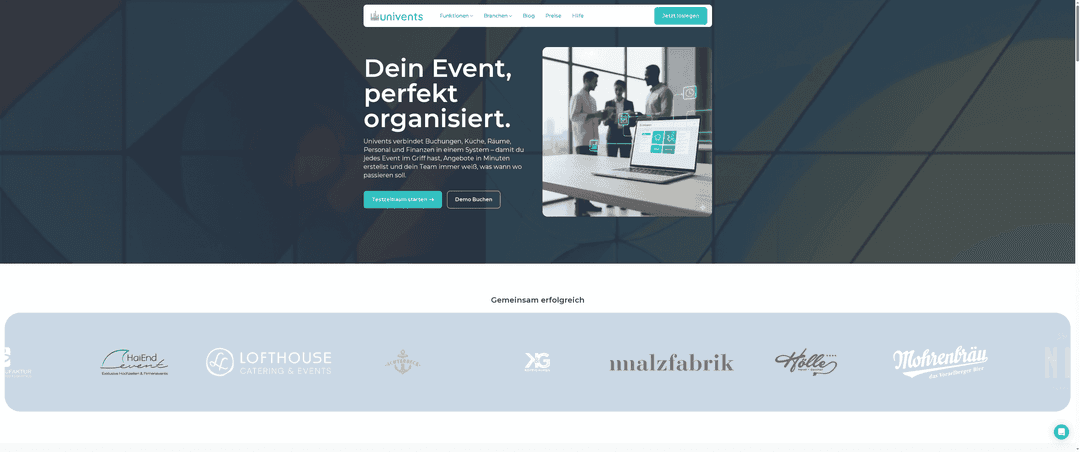
Take advantage of a fully integrated event platform to manage every catering process from one place. From quote creation to kitchen management to staff scheduling, Univents.app doesn't just secure quality and efficiency — it makes your event experience lastingly stress-free. Want a quick first estimate before you dive in? Try the free catering calculator to price out food cost and staffing for your next event. Get started now with a solution that makes your catering more flexible and more cost-effective at Univents.app. Discover how simple automation and real-time data can revolutionize your everyday event operations.
Frequently Asked Questions
What are the main advantages of the buffet concept for events?
The buffet concept gives organizers lower staffing needs, more flexible food service and a more cost-effective setup. Plan the layout and presentation of the dishes strategically to maximize efficiency and give guests a pleasant experience.
How can I design the perfect flying buffet for my event?
A flying buffet encourages interaction and lets guests move freely. Make sure you plan at least 6-8 different bites with a balanced mix of vegetarian and meat options.
What should I consider when implementing plated service?
With plated service, it's essential to serve dishes individually, course by course, to create an exclusive feel. Coordinate closely with the kitchen team on the sequencing and timing.
How can I effectively integrate food stations into my catering concept?
Food stations offer high interactivity and a wide selection. Make sure to distribute the stations evenly around the room and staff each one sufficiently, so guests get a smooth experience.
What defines a sustainable catering concept?
Sustainable catering relies on regional products, minimizing food waste and eco-friendly packaging. Run a needs analysis so you only order the quantities you actually need and cut food waste.
How do I plan business catering efficiently for my corporate event?
Business catering requires precise planning to account for timing and company needs. Communicate requirements clearly with the catering team to ensure smooth execution.
Recommended Reading
- 8 Best Catering Services Software Solutions 2025
- Plan more efficiently, sell better: Future trends for event and catering businesses
- Quote Creation for Caterers Guide: Efficient and Error-Free
- Resource Planning in Catering: Efficient, Step by Step
See how Univents works specifically for your industry – with all features, examples and pricing at a glance.
Catering Software