

Table of Contents
- What Is Production Planning in Catering?
- Process and Key Tasks in Planning
- Technologies and Software Tools in Use
- Common Challenges and Solutions
- Common Mistakes and Best Practices in Event Catering
Key Takeaways
| Point | Details |
|---|---|
| Efficient production planning | Systematically organizing food production is critical to running successful catering events. |
| Use digital technology | Modern software solutions streamline workflows and boost efficiency. |
| Prevent errors proactively | Forward-looking planning and clear communication structures minimize common sources of error. |
| Use resources efficiently | Precise demand forecasting helps you manage resources efficiently and cut costs. |
What Is Production Planning in Catering?
Production planning in catering is the strategic process of systematically organizing and controlling food production for events. Much like industrial production planning systems, it aims to ensure efficient workflows, short lead times, and optimal use of resources.
At its core, it's about precisely coordinating every step from menu planning to service. That includes:
- Menu composition and recipe planning
- Ingredient demand calculation
- Production timing and sequencing
- Staff scheduling
- Logistics and transport management
Modern catering businesses increasingly rely on digital advanced planning and optimization software to orchestrate complex production processes. These systems enable detailed control and forecasting, so caterers can allocate resources precisely and reliably meet quality standards.
The key to successful production planning lies in precisely aligning every component - from kitchen equipment and staff capacity to delivery times and client requirements. It forms the foundation for smooth operations and top culinary quality at every catering event.
Process and Key Tasks in Planning
The production planning process in catering follows a structured sequence that demands precise coordination and strategic preparation. Digital planning systems play a decisive role in optimizing and efficiently managing these complex workflows.
Key tasks include:
- Rough planning: Setting the initial strategic production goals
- Menu development: Creating and finalizing the menu
- Demand calculation: Precisely calculating ingredients and resources
- Capacity planning: Leveling production orders against available capacity
Detailed production planning spans several coordinated phases. It starts with strategic rough planning, where the basic goals and framework conditions are set. From there, concrete steps are defined - from menu design through purchasing and preparation to final production.
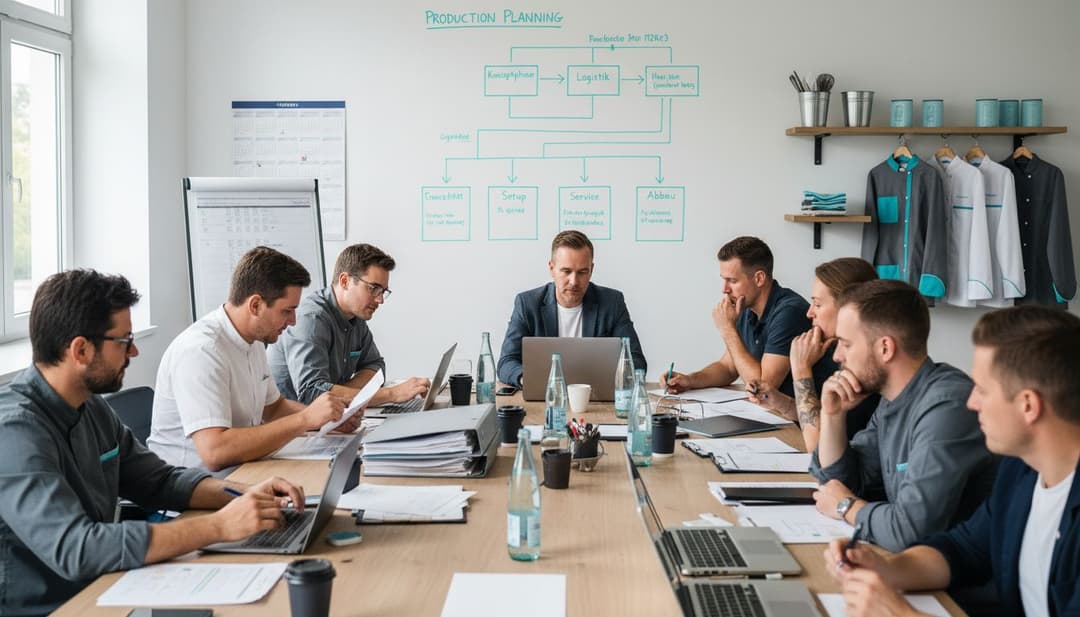
A flexible approach is essential - one that lets you react quickly to change. Modern catering businesses increasingly rely on integrated software solutions that enable near-real-time control and optimal resource allocation, boosting efficiency and minimizing production risk.
Technologies and Software Tools in Use
Modern production planning in catering increasingly relies on sophisticated digital solutions that simplify and optimize complex processes. Specialized production control software enables precise calculation and visualization of production workflows, based on live orders and historical data analysis.
The most important technologies and software tools include:
- Production planning systems: Real-time control of kitchen production
- Demand forecasting tools: Smart prediction of ingredient quantities
- Digital work instructions: Step-by-step process optimization in the kitchen
- Logistics management systems: Optimizing routes and supply chains
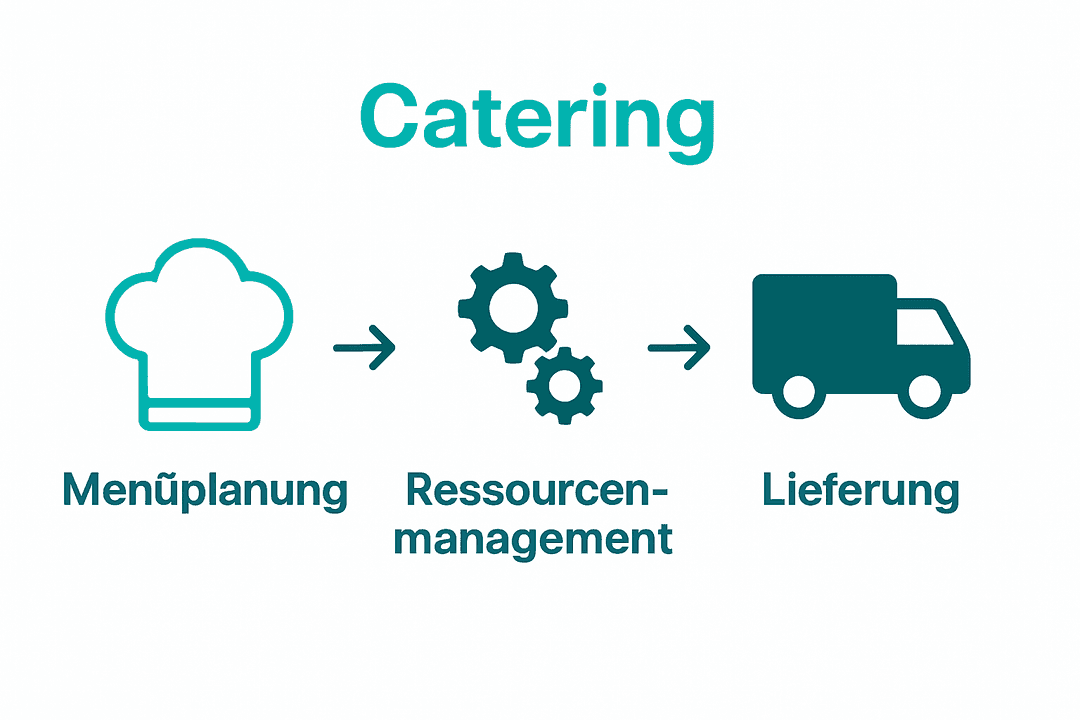
Modern kitchen production software brings menu planning, resource management, and staff coordination together on a single platform. These end-to-end systems let catering businesses work far more efficiently by automating manual processes and improving communication across departments.
The future of production planning lies in the intelligent networking of technologies. Artificial intelligence and machine learning are increasingly being used to sharpen forecast accuracy, optimize resources, and continuously improve production workflows. Catering businesses that adopt these technologies early secure a decisive competitive advantage.
Common Challenges and Solutions
Production planning in catering faces complex challenges that require precise solution strategies. Software solutions for the food industry increasingly offer innovative ways to systematically overcome these obstacles.
Typical challenges include:
- Resource management: Uneven utilization of staff and equipment
- Demand forecasting: Inaccurate predictions of customer requests
- Communication breakdowns: Inefficient coordination between kitchen, service, and administration
- Cost optimization: High fixed costs against fluctuating order volumes
Digital booking platforms let catering businesses tackle these challenges strategically. They create transparency, improve communication, and cut down on the manual processes that have traditionally been error-prone and time-consuming.
The solution lies in a holistic digitalization strategy. Modern catering businesses invest in integrated software solutions that seamlessly connect planning, production, and logistics. These systems use artificial intelligence and data analysis to sharpen forecast accuracy, optimize resources, and continuously raise operational efficiency.
Common Mistakes and Best Practices in Event Catering
Event catering demands precise planning and a high degree of professionalism to minimize potential sources of error. Digital production planning systems offer innovative ways to standardize workflows and reduce risk.
The most common sources of error include:
- Quantity planning: Over- or under-estimating food and ingredient needs
- Time management: Insufficient preparation and delayed workflows
- Communication gaps: Poor coordination between teams
- Quality inconsistency: Inconsistent food preparation
Efficient quoting processes help catering businesses systematically reduce the risk of errors. Best practices focus on forward-looking planning, digital support, and clear communication structures.
Proactive error prevention is essential. Modern catering businesses rely on standardized work instructions, ongoing staff training, and technology-supported quality control. By implementing digital tools, businesses can make processes transparent, lower error rates, and boost customer satisfaction at the same time.
Efficient Production Planning in Catering with Univents.app
The challenges of production planning in catering are complex. From precise quantity planning and flexible time management to seamless communication between kitchen, service, and administration, every step demands the utmost care. Univents.app gives you a central solution that bundles and automates these processes. That means fewer sources of error and better use of your resources.
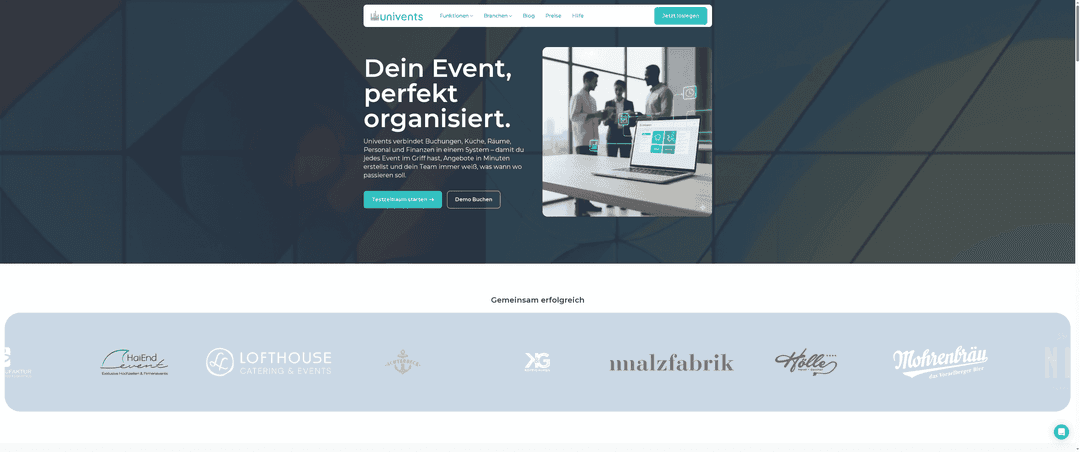
Get started now with an intelligent platform that brings together menu planning, production control, and staff management. Discover how digital production planning systems and a clear interface can make your operations more efficient. For every event and catering professional, Univents.app is the next step toward cutting manual work and securing your competitive edge for the long run. Visit https://univents.app and see for yourself how simple successful catering production planning can be.
Frequently Asked Questions
What does production planning in catering include?
Production planning in catering covers the systematic organization and control of every step from menu planning and ingredient demand calculation through to service. Staff scheduling and logistics management are also key parts of the process.
What technologies are used in catering production planning?
Modern catering businesses use a range of technologies, including production planning systems, demand forecasting tools, and digital work instructions, to optimize production processes and manage resources efficiently.
How can you avoid common sources of error in production planning?
To minimize errors like over- or under-estimating ingredients or communication problems, businesses should implement standardized work instructions and clear communication structures. Forward-looking planning is essential too.
What are the challenges of production planning in catering?
Typical challenges include inaccurate resource management, faulty demand forecasts, communication breakdowns between departments, and optimizing costs against fluctuating order volumes.
Recommended Reading
- Catering Resource Planning Process: Efficient Step by Step
- Catering Resource Planning Process: Efficient Step by Step
- Going Digital in Catering - Moving Beyond Excel & WhatsApp
- 8 Best Catering Services Software Solutions 2025
- Wedding Planning: Everything You Need to Know - Top DJ Munich
- How Dietary Supplements Are Made, Simply Explained
See how Univents works specifically for your industry – with all features, examples and pricing at a glance.
Catering Software