

According to industry studies, nearly one in two large-scale events runs into trouble because organizers lose track of resources and processes. Professional catering planning matters more than ever today, because bottlenecks and unexpected problems cost time, money, and reputation. Working through the entire process in five clear steps, from assessing requirements to quality assurance, doesn't just create efficiency — it lays the foundation for happy guests and successful events.
Table of Contents
- Step 1: Determine the Resource Requirements for the Event
- Step 2: Plan Staff and Material Deployment Strategically
- Step 3: Coordinate Logistics and Schedules Systematically
- Step 4: Monitor Execution in Real Time, Digitally
- Step 5: Review the Outcome and Adjust Your Processes
Quick Summary
| Key Point | Explanation |
|---|---|
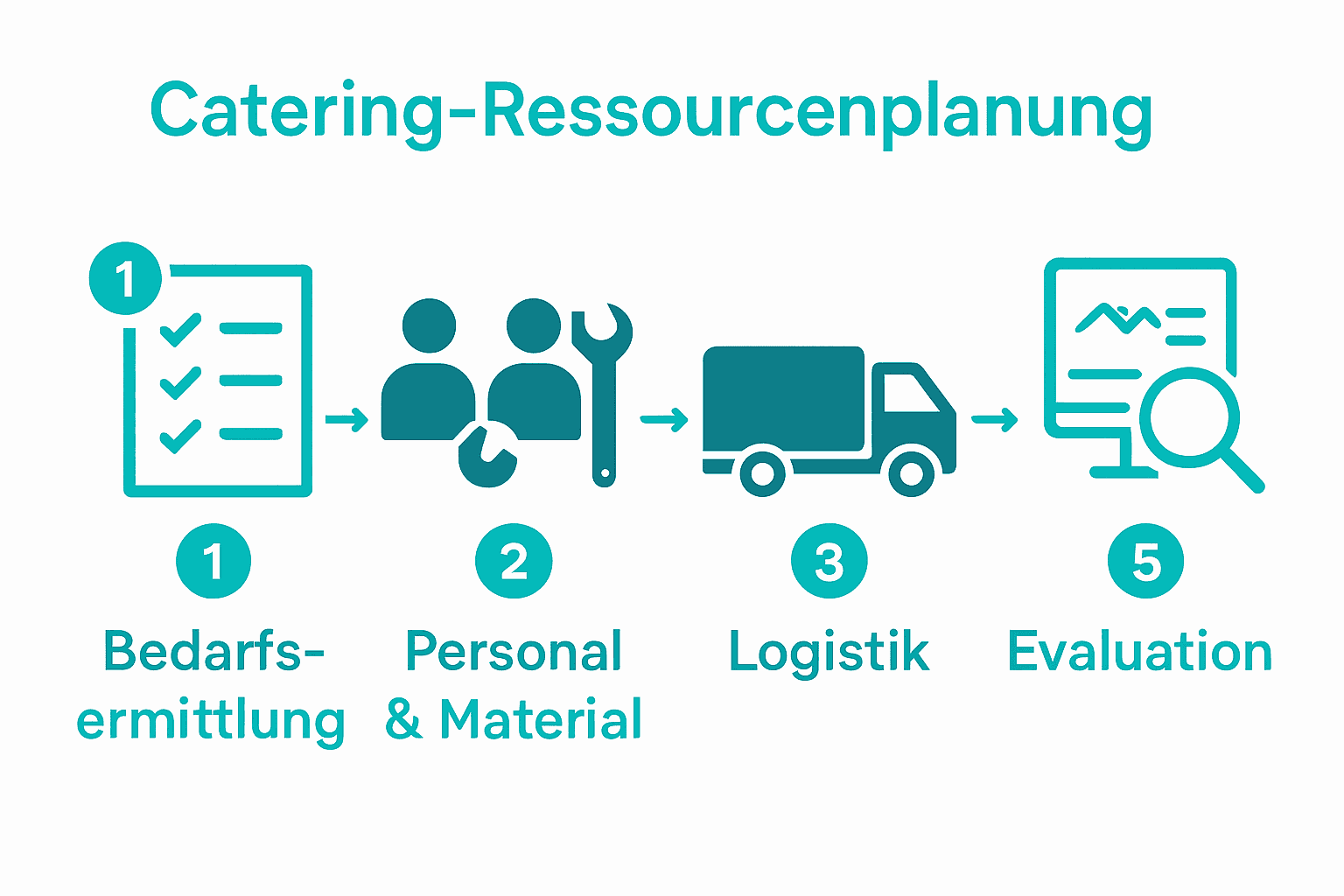
| 1. Detailed Resource Planning | Build a comprehensive list of the resources and capacities you need to avoid bottlenecks. |
| 2. Strategic Staff Planning | Plan staff deployment around individual strengths and team dynamics. |
| 3. Structured Logistics Coordination | Develop a precise schedule and checklist for every logistics process. |
| 4. Real-Time Process Monitoring | Use digital tools to track progress and staff deployment in real time. |
| 5. Continuous Performance Evaluation | Run a critical review after the event to identify opportunities for improvement. |
Step 1: Determine the Resource Requirements for the Event
Catering resource planning is about pinpointing exactly which resources and capacities you need for a successful event. The first critical step is a systematic needs assessment that helps you shape your event logistics as effectively as possible.
Start with a detailed analysis of the event size and its specific requirements. First, determine the guest count, then build a comprehensive list of the resources involved: kitchen staff, service staff, kitchen equipment, tableware, transport vehicles, and the food quantities you'll need. Use digital planning tools like event management software to sharpen your planning and cut down on errors.
Pay close attention to specific details such as allergies, vegetarian or vegan preferences, and any culinary requirements unique to the event. Precise advance planning prevents bottlenecks and guarantees a smooth run of show. As a rule of thumb: the more detailed your resource planning, the more professional and stress-free your catering event will be.
Pro tip for efficient resource planning: always build in a buffer of 10 to 15 percent extra resources. This gives you flexibility for unexpected situations and protects the quality of your catering service.
Step 2: Plan Staff and Material Deployment Strategically
This step is about planning your staff and material deployment strategically and efficiently. Precise coordination is critical to the success of your catering event.
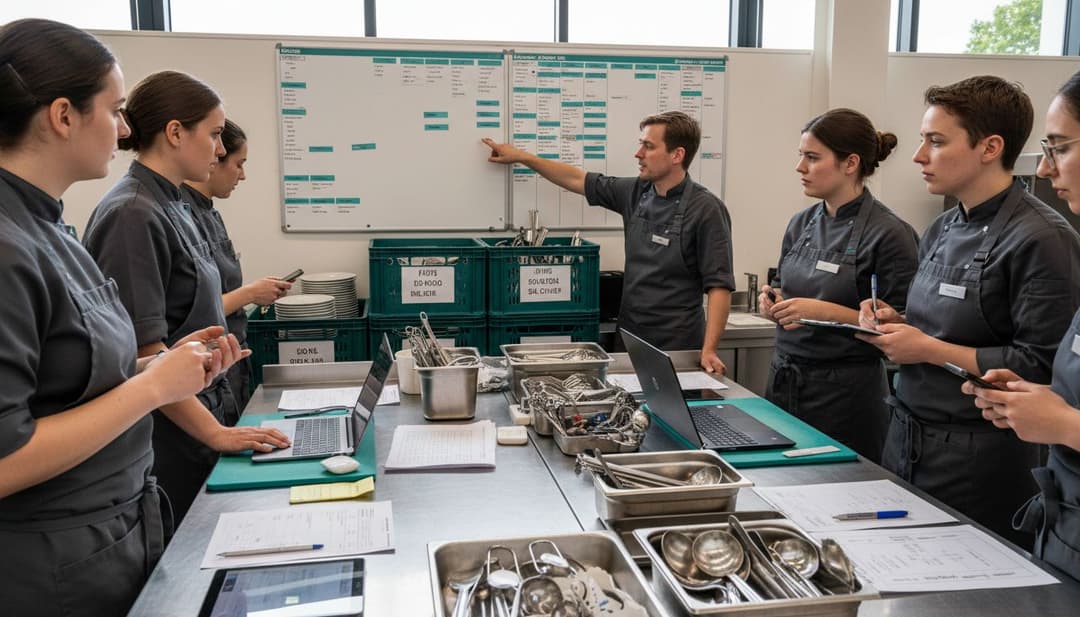
According to Hesse's Ministry of Education and Cultural Affairs, staff planning should take social and psychological factors into account. In practice, that means putting together a well-thought-out team based on individual strengths and skills. Start by analyzing your available staff, then assign people to different event tasks based on their skills and experience.
When it comes to materials, run a complete inventory. Record every piece of equipment you'll need in detail: kitchen appliances, tableware, transport equipment, and work materials. Digitizing your catering operation can help you streamline these processes and keep a clear overview.
A key practical tip: always plan for a staffing ratio of at least one service staff member per 10 to 15 guests. This ensures smooth service and high guest satisfaction. A flexible staff reserve also gives you a safety net for unexpected challenges.
Step 3: Coordinate Logistics and Schedules Systematically
This critical step is about coordinating your entire catering logistics precisely and proactively. Systematic scheduling is the foundation of a smooth-running event.
The key is a detailed process plan. Build a comprehensive schedule that covers every aspect of your event, from the delivery of raw ingredients to the final clean-up. Planning more efficiently, in practice, means using digital planning tools that help you optimize transport routes, synchronize delivery times, and tighten up workflows.
For logistics coordination, it's worth building a checklist. It should cover the core points: transport and routes, setup and teardown windows, cold chain management, staff shifts, and delivery locations. A professional approach also means building in buffer time for unexpected delays.
A critical practical tip: build in at least 30 percent time reserve. This gives you flexibility for unforeseen logistical challenges and reduces stress on your team.
Step 4: Monitor Execution in Real Time, Digitally
This step is about monitoring your catering operations in real time using the latest digital technology. Precise, transparent real-time tracking is essential for a smooth-running event.
Digital real-time tracking gives you comprehensive control over every event process. Use catering services software to continuously track production progress, staff workload, and logistics. Important things to monitor include real-time inventory management, staff location tracking, and instant status updates on prep and delivery.
Set up a central dashboard that gives you a complete overview of every relevant event parameter. Look for an intuitive interface that lets your team quickly spot and interpret critical information.
A critical practical tip: define clear escalation protocols in advance for when things go off track. A structured approach helps you get ahead of challenges and minimize disruptions immediately.
Step 5: Review the Outcome and Adjust Your Processes
This final step is about systematically evaluating your catering performance and continuously improving it. A critical analysis is essential for optimizing your event processes going forward.
Focus on a thorough performance review. Look closely at every aspect of your event, from preparation through execution. Automating kitchen production gives you a precise way to assess productivity and efficiency. Put together a structured results report that identifies both strengths and areas for improvement.
Pay particular attention to measurable metrics like time management, staff productivity, and customer feedback. A holistic approach means not just spotting problems, but developing concrete solutions for them.
An important practical tip: build a culture around mistakes that focuses on constructive improvement rather than blame. Actively encourage your team to bring forward suggestions and work out solutions together.
More Success in Catering Resource Planning With Digital Support
Precisely planning staff, materials, and logistics is a major challenge for any caterer who wants to work professionally and without unnecessary stress. That's exactly where Univents.app comes in. Our platform helps you manage every step — requirements assessment, real-time monitoring, process optimization — centrally, while avoiding costly mistakes. Thanks to automation and real-time digital tools, you always stay on top of things and can respond flexibly to unexpected situations.
Get started with Univents today and turn your resource plan into a highly efficient success story. Discover how easy it is to make your events run more efficiently with catering services software and the other features at univents.app. Experience the difference when digitalization redefines your catering process from the ground up.
Frequently Asked Questions
How do I determine the resource requirements for my catering event?
To determine your resource requirements, start with the guest count and build a list of everything you need: staff, equipment, and food. Plan in detail to avoid bottlenecks and guarantee a smooth event from start to finish.
What role does staff planning play in the catering process?
Staff planning is critical to your event's success. Plan for at least one service staff member per 10 to 15 guests to guarantee smooth, stress-free service throughout.
How can I improve logistics and scheduling for my catering business?
Improve your logistics by building a detailed schedule that covers every part of the event. Build in a buffer of at least 30 percent to manage unexpected delays and reduce stress on your team.
Which digital tools help me monitor my event in real time?
Use digital tools to track and control processes in real time, including staff and inventory management. Implement a central dashboard to boost your team's efficiency and surface critical information quickly.
How can I improve my catering processes after the event?
Run a comprehensive performance review to identify what worked and what could be better. Build a culture around mistakes that focuses on constructive improvement, and actively encourage your team to bring forward suggestions.
Recommended Reading
- Plan smarter, sell better: future trends for event and catering businesses
- 8 best catering services software solutions for 2025
- Digitizing your catering business — moving beyond Excel and WhatsApp
- Catering Software | Automated Processes | Univents
See how Univents works specifically for your industry – with all features, examples and pricing at a glance.
Catering Software