


Today, more than 80 percent of event businesses rely on digital systems to make their operations more efficient. The demands placed on events keep growing more complex, and every minute counts during planning and execution. Event management software doesn't just simplify tedious administrative tasks — it also creates room for innovation and smooth operations. Companies that use modern solutions benefit from noticeable time savings and structured communication between everyone involved.
Table of Contents
- Event Management Software: Definition and Core Concepts
- Main Types of Event Management Software Compared
- Key Features and Automation Capabilities
- Typical Use Cases for Event Professionals
- Criteria for Choosing the Right Platform
- Risks, Costs, and Common Pitfalls
Key Takeaways
| Point | Details |
|---|---|
| Event management software optimizes processes | Digital systems make it easier for event professionals to manage and automate workflows, significantly increasing efficiency. |
| Core features are critical | Important features include booking management, production planning, and resource control, which ensure smooth operations. |
| A strategic investment is required | Choosing the right software is critical to success and should be based on technical and functional criteria. |
| Watch out for risks and pitfalls | Introducing new systems can carry risks, which is why training and careful planning are essential. |
Event Management Software: Definition and Core Concepts
Event management software is a digital system that helps event professionals optimize and automate complex event processes. This technological solution enables companies in the event industry to streamline their workflows, manage resources efficiently, and improve communication between everyone involved.
The core functions of modern event management software typically cover several key areas:
- Booking management: digital handling of inquiries and reservations
- Production planning: automated creation of production lists and schedules
- Resource control: intelligent allocation of staff, equipment, and venues
At the EVVC Management Conference 2025, it became clear that modern event management software doesn't just simplify administrative tasks — it also optimizes visitor flow and content management. The next generation of these systems aims to make venues smarter, more efficient, and more sustainable.
For event professionals, this means massive time savings and significantly improved process quality. Professional event management software can help companies digitize their workflows, reduce error rates, and increase customer satisfaction at the same time. Investing in such technology is increasingly seen not just as an option, but as a strategic necessity for competitive event businesses.
Main Types of Event Management Software Compared
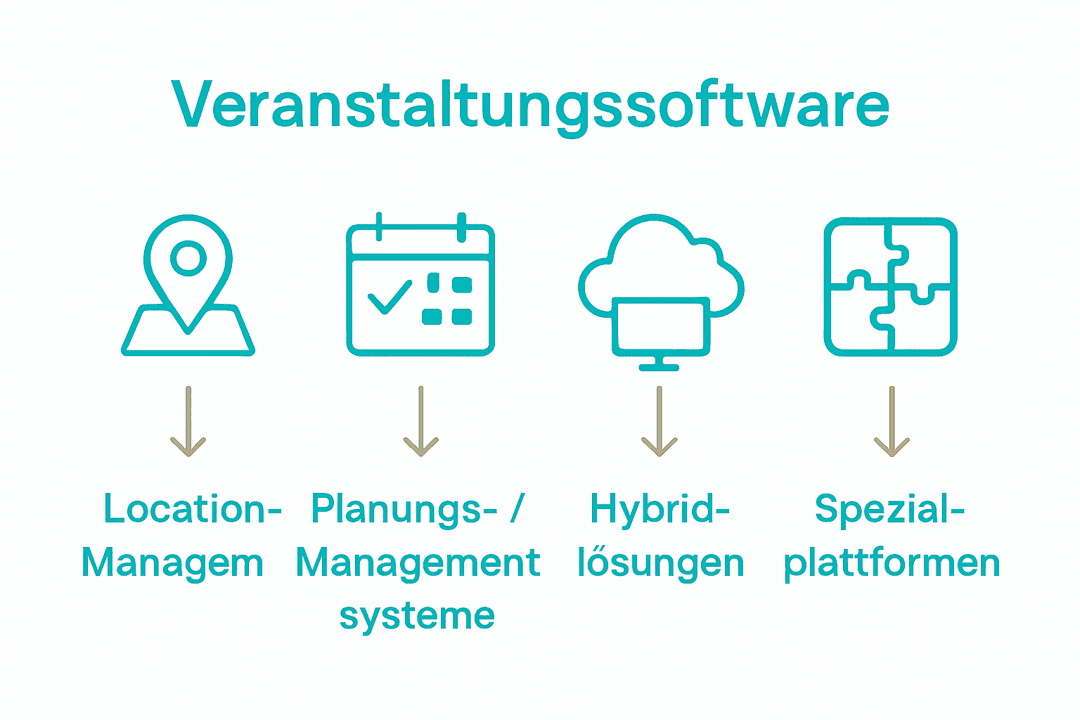
The world of event management software is diverse and complex, with different solutions tailored to different needs and industries. Broadly speaking, the main types fall into four core categories, each covering specific functionalities and use cases.
1. Venue Management Software
These software solutions are specifically designed for event venues. At the EVVC Management Conference 2025, the Smart Event Manager was introduced — a modular, web-based application for comprehensive control of venue processes.

2. Event Planning and Management Systems
These systems focus on complete schedule planning, resource allocation, and coordination for events. They offer comprehensive tools for:
- Detailed event calendars
- Budgeting and financial tracking
- Communication management
- Attendee and access control
3. Hybrid Cloud-Based Solutions
Cloud solutions for event agencies are becoming increasingly important. These flexible systems enable location-independent collaboration and centralized data management.
4. Industry-Specific Specialized Software Solutions
Some software solutions are tailored to specific event segments, such as:
- Conference and trade show management
- Wedding and celebration planning
- Cultural events
- Sporting events
The Momentus Technologies platform, for example, demonstrates how modern systems can bring together all the key functions venues need worldwide. Choosing the right event management software depends heavily on individual requirements, company size, and the specific industry.
Key Features and Automation Capabilities
Event management software has evolved from a simple booking tool into a complex automation system that covers nearly every aspect of event planning and execution. Modern efficiency gains in event management enable companies to fundamentally transform their processes.
Core Automation Features
Digital visitor management is a key element of modern event systems today. Digital systems for event venues allow for precise control over visitor flow, content, and resource management.
The core automation features include:
- Quote generation: automatic creation of tailored quotes
- Resource planning: intelligent allocation of staff and equipment
- Communication automation: real-time communication with customers and partners
- Financial processing: seamless invoicing and payment tracking
Technological Integration
The platform presented by Momentus Technologies shows how modern systems can seamlessly integrate complex functions such as occupancy planning, quote generation, and automated workflows.
The benefits of this automation are substantial: time savings, reduced error rates, improved customer interaction, and significantly higher overall efficiency. This lets event professionals focus on strategic tasks while routine activities are handled automatically.
Typical Use Cases for Event Professionals
Event management software is transforming the work of event professionals across nearly every industry today. The benefits of a modern event management system show just how versatile these technologies can be.
Use Case: Venues
Large venues such as trade fairs, stadiums, or event halls use digital systems for efficient visitor management and targeted content coordination. The main applications include:
- Visitor flow management: controlling and monitoring audience flow
- Resource optimization: intelligent allocation of rooms and equipment
- Real-time monitoring: continuous oversight of event operations
Industry-Specific Applications
These applications extend across a range of event segments:
- Conference and trade show organization
- Cultural events
- Sporting events
- Wedding and celebration planning
- Corporate events
The platform developed by Momentus Technologies demonstrates how modern software solutions can optimize event processes and implement sustainable standards worldwide. For event professionals, this represents a revolution in how they plan, run, and follow up on their events.
Criteria for Choosing the Right Platform
Choosing the right event management software is a strategic decision with far-reaching consequences for a company's efficiency. Event planning systems can save time and money when they're optimally tailored to specific requirements.
Key Selection Criteria
When evaluating event management software, the following core aspects should be considered:
Technical criteria:
- Modularity: flexibility and adaptability
- Web-based architecture: usable from anywhere
- Data protection: GDPR compliance
- Scalability: adapts to company growth
Functional criteria:
- Comprehensive process control
- Integrated communication tools
- Automation capabilities
- Reporting and analytics tools
Practical Evaluation
The platform presented by Momentus Technologies shows how modern software solutions can meet global standards. When making your selection, it's worth checking the following aspects:
- Try demo versions
- Gather references and customer reviews
- Test compatibility with existing systems
- Evaluate training and support offerings
The right platform won't just digitize your event processes — it will fundamentally transform them.
Risks, Costs, and Common Pitfalls
Implementing event management software is a complex investment decision that requires careful planning. The digital transformation of the catering business shows just how important a strategic approach is when choosing a system.
Financial Risks
The cost of event management software varies significantly and includes:
- Acquisition costs: a one-time investment in licenses
- Ongoing subscription fees: monthly or annual payments
- Implementation effort: training and system rollout
- Maintenance and update costs: technical support
Common Pitfalls
When introducing new software systems, the following challenges typically arise:
- Insufficient staff training
- Lack of system compatibility
- Data migration issues
- Insufficient adaptability to company processes
Strategies for Minimizing Risk
Automated quote creation processes can help reduce potential sources of error. Important prevention strategies include:
- A thorough needs analysis before choosing a system
- Comprehensive staff training
- Phased implementation
- Regular system reviews and adjustments
Investing in the right event management software can generate significant efficiency gains and cost savings in the long run — provided it's implemented carefully and strategically.
Efficient Event Planning with Univents.app for Smart Event Professionals
The complex challenges of modern event organization call for a powerful solution that automates and centralizes every process. This is exactly where Univents.app comes in, helping event professionals make the entire workflow — from quote creation through resource planning to final invoicing — digital and transparent. This effectively avoids typical problems like manual errors, inefficient communication, and a lack of real-time overview.
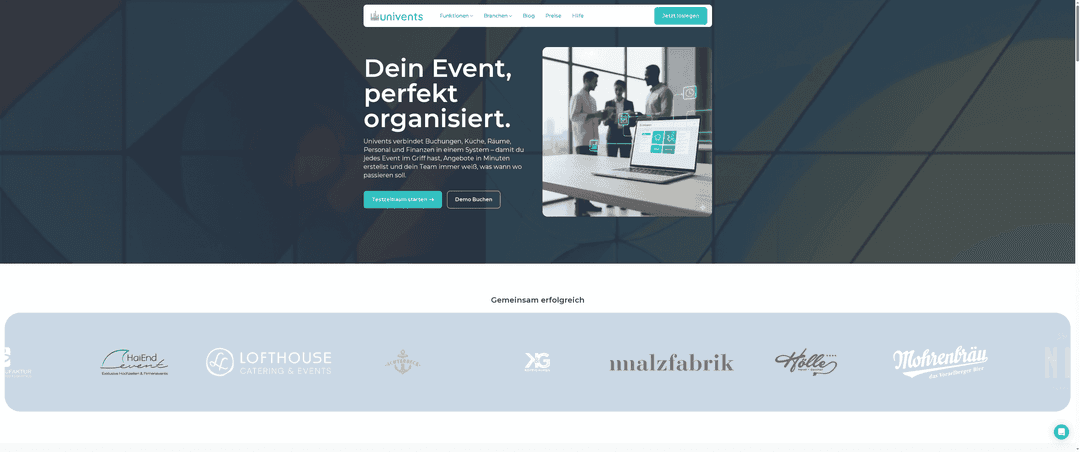
Take the opportunity to bring your event planning to a new level and see for yourself how simple and clear managing events can be with integrated software. Learn more about the flexible system and its benefits at Univents.app and put your event organization in the fast lane with professional event management software. Get started now and secure lasting efficiency gains for your event business with Univents.app.
Frequently Asked Questions
What is event management software?
Event management software is a digital system that helps event professionals optimize and automate event processes. It supports booking, production planning, and resource control.
What are the main types of event management software?
The main types of event management software are: venue management software, event planning and management systems, hybrid cloud-based solutions, and industry-specific specialized software solutions.
What are the key features of event management software?
Key features include digital visitor management, quote generation, resource planning, communication automation, and seamless financial processing.
What criteria should you consider when choosing event management software?
Key criteria include technical aspects such as modularity and web architecture, as well as functional aspects such as comprehensive process control and automation capabilities.
Recommended Reading
- 7 Benefits of an Event Management System
- Event Management Software 2025: Comparison, Features & Selection Guide
- Plan more efficiently, sell better: future trends for event and catering businesses
- Event Management Software for Agencies & Teams | Univents
- Corporate Event DJ Munich – Your Event DJ for Companies
See how Univents works specifically for your industry – with all features, examples and pricing at a glance.
Event Agency Software