

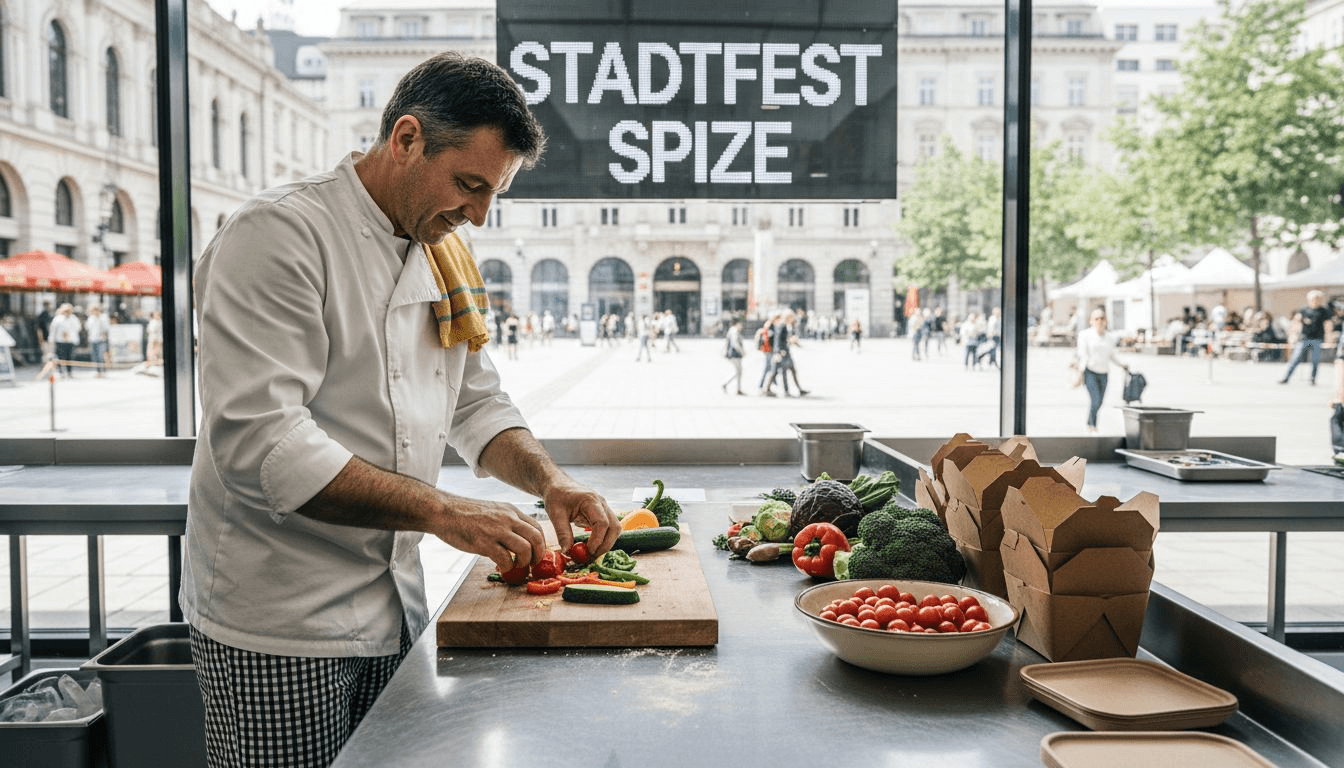
More than 72% of catering companies are embracing sustainability as the top trend for 2026, while technological automation and personalization are revolutionizing the industry. This guide shows event planners and catering providers concrete trends, practical implementations, and economic benefits for 2026. You'll learn how to stand out from the competition and meet customer expectations perfectly.
Table of contents
- Sustainability and environmentally conscious catering
- Technological innovations and automation in catering
- The impact of nutrition and food trends in 2026
- Personalization and new customer expectations
- Hygiene, safety, and new standards after the pandemic
- Practical examples and success factors for catering in 2026
- Univents: software solutions for modern catering management
Key takeaways on catering trends 2026
| Point | Details |
|---|---|
| Sustainability dominates | Local ingredients, waste reduction, and eco-friendly packaging are central to competitiveness in 2026. |
| Automation boosts efficiency | Digital tools reduce errors by 40% and save 25% of preparation time in event planning. |
| Plant-based menus are growing | 55% of caterers are expanding their offering with vegan and vegetarian options to meet changing customer demand. |
| Personalization builds loyalty | 68% of customers prefer individually tailored menus, which increase satisfaction and loyalty. |
| Hygiene remains decisive | 47% of customers rate hygiene standards as the most important criterion when choosing a caterer. |
Introduction to catering trends 2026
The catering industry is undergoing profound change in 2026, driven by three main pillars: sustainability, technology, and personalization. These trends don't just shape individual aspects — they transform entire business models.
Sustainability remains the megatrend that is fundamentally changing sourcing, production, and packaging. In 2026, sustainability is the top strategic focus for 72% of companies. This trend goes far beyond green marketing claims — it affects core operational processes.
Technological innovations and digital automation measurably improve efficiency and quality. The possibilities range from AI-supported menu planning to AR visualizations for customers, replacing traditional manual processes. These Catering Trends 2025 have continued to solidify in 2026.
Individual customer preferences are leading to highly personalized catering offerings. Standard menus are losing relevance, while flexible, adaptable solutions increase customer satisfaction. The market is changing due to:
- Rising expectations for sustainability and ethical sourcing
- A growing variety of dietary preferences and intolerances
- Higher demands on digital booking and communication processes
- The need for transparent hygiene and safety standards
These developments are not passing fads but structural changes that require long-term adaptation. Companies that use these trends strategically secure significant competitive advantages. According to Business Trends 2025, companies that respond early to market changes benefit.
Sustainability and environmentally conscious catering
In 2026, sustainability no longer just defines positioning — it becomes an operational standard. 72% of caterers rely on sustainable measures such as local ingredients and reduced packaging to meet customer expectations.
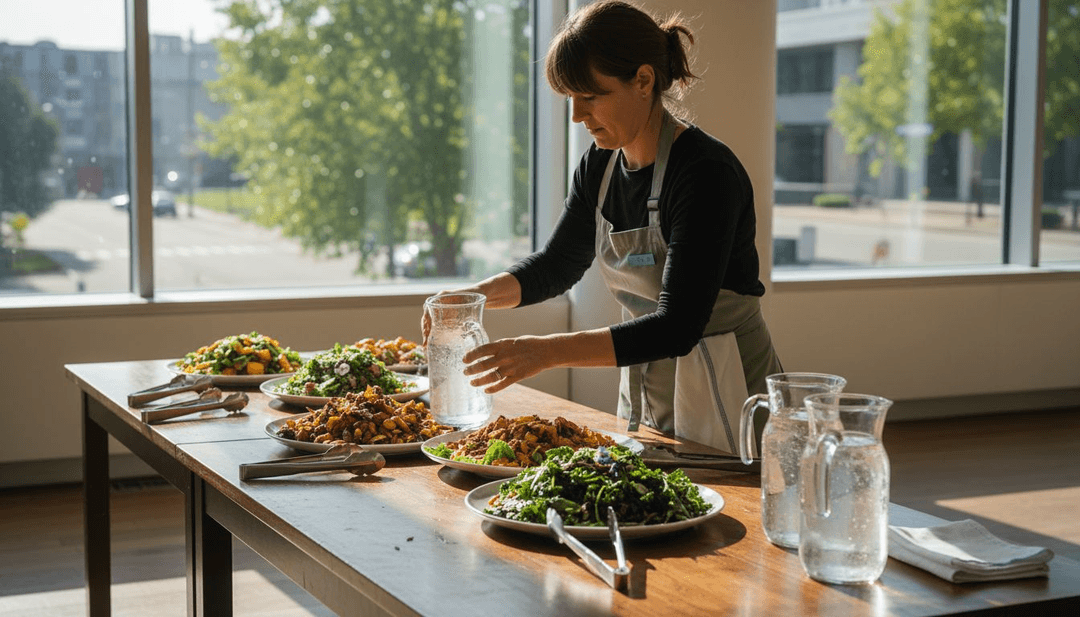
Local and seasonal sourcing reduces transport distances and CO₂ emissions while strengthening regional producers. Fresh, high-quality regional ingredients also improve the taste and authenticity of dishes. This approach combines ecological responsibility with culinary excellence.
Waste prevention and recycling are central elements of modern catering concepts:
- Precise portion planning minimizes food waste
- Composting organic waste closes material cycles
- Reusable serviceware replaces single-use products
- Digital demand planning optimizes purchasing quantities
Eco-friendly packaging and reusable solutions are gaining massive importance. Bio-based materials, edible packaging, and deposit systems offer innovative alternatives to plastic. Customers increasingly expect and reward these measures.
A common misconception holds that sustainability is too expensive. In fact, studies show the opposite. Long-term cost savings of 10-15% are achievable through optimized sourcing, reduced waste fees, and more efficient processes. Sustainable practices also significantly strengthen customer loyalty.
"Sustainable catering concepts are not a cost factor, but an investment in customer loyalty and operational efficiency."
Sustainable measures create real competitive advantages. Customers deliberately choose providers who communicate transparently about origin, production methods, and environmental impact. These practical catering trends show that economic sustainability and ecological responsibility complement each other.
Pro tip: Communicate your sustainability measures clearly and measurably. Statements like "80% local ingredients" or "95% recyclable packaging" build trust and set you apart.
Technological innovations and automation in catering
Digital transformation is fundamentally and measurably changing catering operations. Automation reduces errors by 40% and saves 25% of preparation time, which directly boosts profitability.
Automated systems take over repetitive tasks from ordering to invoicing. Sources of error such as manual data entry, duplicate bookings, or forgotten order items are eliminated. These digital catering processes speed up the entire event lifecycle.
AR and VR technologies are revolutionizing customer presentations:
- Virtual room visualization shows table setup and decoration in advance
- AR apps let customers view menus in three dimensions
- Digital tastings reduce the effort involved in menu selection
- Immersive presentations significantly increase closing rates
Digital production planning and communication tools significantly improve team coordination. Real-time updates on order changes, automatic production lists, and integrated staff scheduling keep everyone involved in sync. Automation in catering eliminates information gaps.
A common concern: does digitalization replace jobs? Reality paints a different picture. Technology takes over administrative routines, while staff can focus on creative, customer-facing tasks. Jobs change, but they don't disappear.
| Aspect | Traditional method | Digital solution |
|---|---|---|
| Quote turnaround | 2-3 days | 2-3 hours |
| Error rate | 15-20% | 3-5% |
| Customer communication | Email, phone | Central platform |
| Production planning | Manual, Excel | Automated, real-time |
The comparison table shows clear efficiency gains from digital catering solutions. These advantages add up over the year to substantial time and cost savings.
According to Business Automation 2025, automation enables scalable growth without a proportional increase in costs. Catering companies can handle more events with the same staff.
Pro tip: Start by automating a single process, such as bookings or production lists. Gain experience before digitizing other areas. A step-by-step rollout secures buy-in from the team.
The impact of nutrition and food trends in 2026
In 2026, nutrition trends are fundamentally shaping the catering portfolio. Customers no longer expect just standard options, but diverse, health-conscious, and ethically responsible menus.
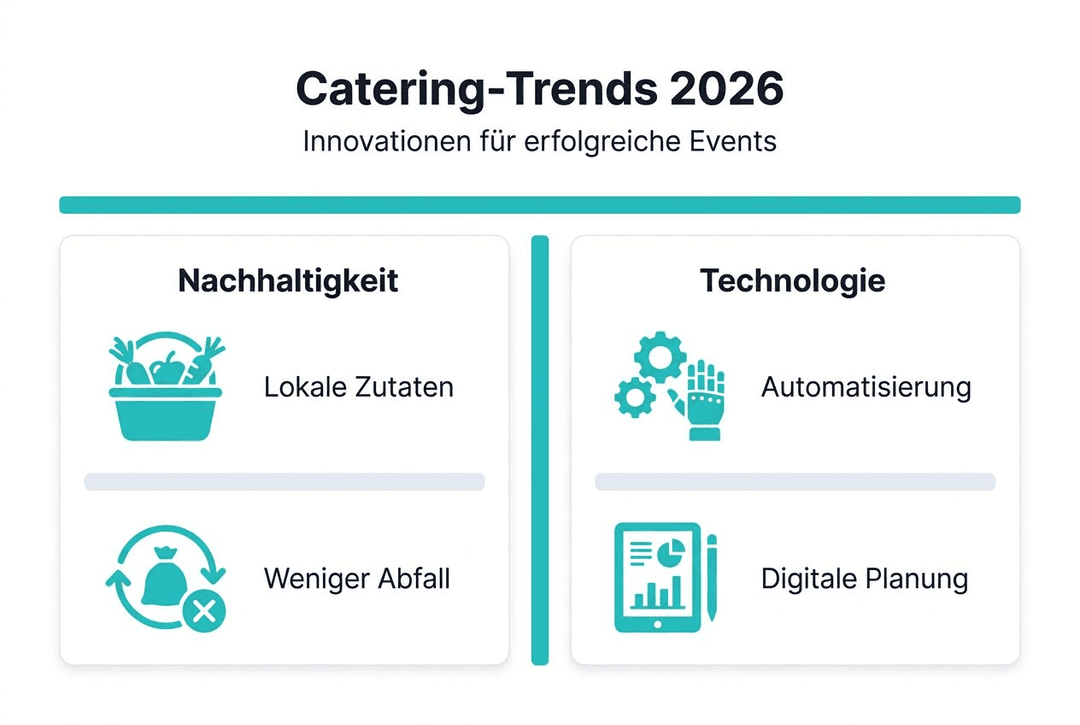
Plant-based, vegan, and vegetarian dishes are experiencing an unprecedented boom. 55% of caterers are actively expanding their offering in this segment to meet growing demand. This trend goes far beyond niche markets and is reaching the mainstream.
Health-conscious eating is massively influencing menu design:
- Reduced sugar and salt content without sacrificing flavor
- Whole, nutrient-rich ingredients instead of highly processed products
- Transparent nutritional information and allergen labeling
- Functional foods with added health benefits
Ethical aspects such as animal welfare, fair working conditions, and environmentally friendly production are becoming increasingly important to customers. They critically question origin and production methods and choose caterers based on these criteria.
Flexibility in menu design offers a decisive competitive advantage. The ability to respond quickly to special requests, intolerances, or dietary preferences distinguishes successful providers from average ones. Modular menu systems enable this adaptability.
Integrating new dietary approaches supports strategic market positioning. Providers that professionally implement trends like the ketogenic diet, paleo, or gluten-free options early on open up new customer groups. These catering nutrition trends continue to evolve.
Pro tip: Train your kitchen staff regularly on new nutrition trends and preparation techniques. Competent customer advice strengthens your position as an expert.
Personalization and new customer expectations
In 2026, personalization is redefining the customer experience in catering. 68% of customers prefer individually tailored menus over standard offerings, underscoring the strategic importance of this trend.
- Interactive menu configurators for individual selection
- Filter options by diet, allergens, or preferences
- Transparent price calculation with every change
- Instant availability display for the desired options
Personalization measurably strengthens customer loyalty and creates differentiation in a competitive market. Customers who receive tailor-made solutions book again more often and actively recommend the provider. This loyalty justifies higher prices for personalized offerings.
Involving customers in menu development fosters satisfaction and a sense of ownership. Joint tastings, feedback sessions, and iterative adjustments create a collaborative relationship. Customers feel heard and valued.
Digital tools are the key to efficiently implementing personalization. Without digitizing catering operations, the administrative effort for personalized offerings would be nearly unmanageable. Modern communication tools for caterers automate coordination and centrally document preferences.
Pro tip: Create customer profiles that store preferences, allergies, and past bookings. This lets you proactively make suitable suggestions and personalize the service for repeat bookings.
Hygiene, safety, and new standards after the pandemic
Hygiene and safety standards have carried a permanently higher priority since the pandemic. 47% of customers rate hygiene as a decisive selection criterion, making this dimension a genuine competitive factor.
Catering providers must continuously update their hygiene concepts and communicate them transparently:
- Documented cleaning protocols for all work areas
- HACCP-compliant processes from goods receipt to delivery
- Regular microbiological checks and audits
- Digital temperature monitoring and cold-chain management
Clear, traceable hygiene standards significantly boost trust among organizers and guests. Visible measures such as plexiglass shields at buffets, individual portioning, or contactless serving systems signal professionalism.
Staff training is essential for consistently implementing new requirements. Hygiene awareness must be anchored in company culture, not just exist on paper. Regular training and refreshers ensure consistently high standards.
Hygiene management is becoming a hallmark of quality and safety. Certifications, transparent documentation, and proactive communication set professional providers apart from less diligent competitors. This investment pays off through trust and referrals.
Practical examples and success factors for catering in 2026
Concrete case studies show how catering providers successfully implement trends and achieve measurable benefits. These practical catering examples provide valuable insights.
A mid-sized caterer fully automated booking, production planning, and staff management. Result: 30% faster order processing, 25% time savings in administration, and 40% fewer errors. The investment paid for itself within 14 months.
Another example: an event caterer switched entirely to sustainable, local sourcing. The initial 8% cost increase was more than offset by reduced inventory, lower spoilage rates, and higher customer willingness to pay. After two years, the net margin was 12% above the industry average.
Adapting to nutrition trends measurably increases customer numbers and satisfaction. One provider expanded its portfolio by 40% with plant-based options and thereby gained 25% new customers in the corporate segment who had previously used other providers.
| Success factor | Traditional approach | Best practice 2026 |
|---|---|---|
| Trend integration | Reactive, hesitant | Proactive, strategic |
| Staff training | Sporadic | Regular, systematic |
| Customer communication | One-way | Dialogue, feedback-oriented |
| Technology use | Minimal, isolated | Comprehensive, integrated |
Transparent communication of new concepts significantly strengthens customer loyalty. Customers appreciate honesty about challenges and improvement processes. This openness creates authentic relationships.
Key success factors for 2026:
- Long-term strategic integration instead of short-term measures
- Systematic team training and change management
- An active feedback culture with customers and staff
- Continuous optimization based on data and metrics
- Bold innovation combined with consistent quality assurance
Univents: software solutions for modern catering management
The trends described here require powerful digital infrastructure. Univents offers specialized software solutions for event planners and caterers who want to put automation, sustainability, and personalization into practice.
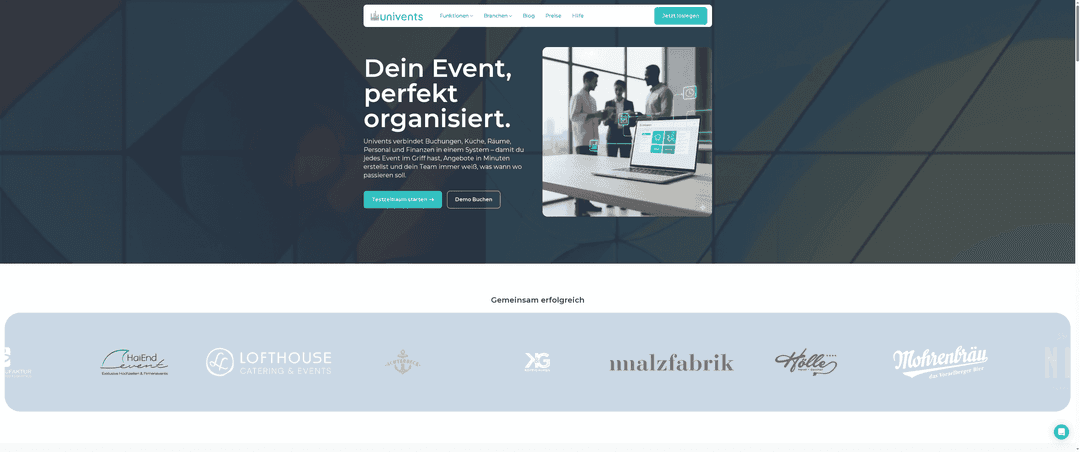
The Event Management Software centralizes all processes from inquiry to invoicing. The automated booking system reduces manual errors and significantly speeds up order processing. Digital production lists, resource planning, and staff management are seamlessly integrated.
Efficient communication through the Event Hub improves coordination with customers, suppliers, and the team. All information is centrally available, and updates happen in real time. This integration eliminates media breaks and information loss.
Univents supports sustainable concepts through optimized resource planning and precise demand forecasting. Overproduction and waste are minimized. Thanks to flexible modules, personalized offerings can be created and managed efficiently.
Modern technology measurably boosts your competitiveness. With the right tools, the trends described here are practical to implement and economically advantageous.
Frequently asked questions
Which sustainable measures are essential in catering in 2026?
Sourcing seasonal ingredients locally, consistently preventing waste, and using eco-friendly packaging form the foundation of sustainable catering. These measures not only meet customer expectations but also reduce costs in the medium term through optimized processes. Transparent communication of the sustainability strategy also significantly strengthens market position.
How do sustainable concepts actually reduce costs?
Optimized sourcing of local products reduces transport costs and inventory. Precise portion planning minimizes food waste and disposal fees. Savings of 10-15% are realistic in the long term, while customer loyalty and willingness to pay increase at the same time.
What training do staff need for sustainable standards?
Regular training on waste prevention, correct waste separation, and resource-conscious working methods is essential. Sustainability awareness needs to be anchored in company culture. Practical workshops with measurable goals ensure consistent implementation in everyday operations.
How exactly do digital tools improve catering efficiency?
Digital production planning optimizes resource use through precise demand forecasting and automatic shopping lists. Error rates drop by 40%, while preparation time is reduced by 25%. Real-time updates keep the team, kitchen, and logistics seamlessly in sync.
Do automation systems replace jobs in catering?
Automation takes over routine administrative tasks but does not replace creative or customer-facing work. Staff can focus on higher-value tasks. Jobs change, but overall employment remains stable or grows through increased capacity.
Which communication tools improve customer service?
Central platforms bring together emails, messages, and documents in one place. Automatic notifications keep customers informed about order status. Digital approval processes speed up decisions and significantly reduce misunderstandings.
Which plant-based trends will dominate catering in 2026?
Vegan and vegetarian options are the standard, not a niche. 55% of caterers are actively expanding this segment. Innovative meat alternatives, creative vegetable preparations, and nutrient-rich bowl concepts are increasingly shaping modern menus.
How do caterers respond to diverse dietary needs?
Flexible, modular menu systems enable individual adjustments without extra effort. Digital configurators automatically filter by allergens and dietary preferences. Transparent ingredient lists and nutritional information build trust with health-conscious customers.
Why do customers demand ethically responsible menus?
Growing awareness of animal welfare, environmental impact, and social justice is shaping purchasing decisions. Customers expect transparency about origin and production conditions. Ethical catering becomes an expression of personal values and significantly influences the choice of provider.
Recommended reading
- 7 Practical Catering Trends for 2025 Explained for Professionals
- 8 Best Catering Services Software Solutions for 2025
- Digital Solutions for Event Catering – 2025 Comparison
- 7 Practical Catering Concept Examples
- Travel pillow design trends 2026: Up to 50% better comfort – BOLSTIE TRAVEL PILLOW
- Food Photography Backdrop Importance: Impact on Visual Appeal – Instant Backdrops
See how Univents works specifically for your industry – with all features, examples and pricing at a glance.
Catering Software