


The events industry is undergoing a technological revolution in 2026. 68% of successful events now use AI-driven personalization, boosting attendee engagement by 47%. Professional event management combines strategic planning with intelligent automation to keep budgets on track, streamline processes, and create unforgettable experiences. Integrating modern technology is no longer optional — it's a decisive competitive factor for event managers and event technicians alike.
Table of contents
- Key takeaways for event management 2026
- Fundamentals and tasks of event management
- Technology in event management: from artificial intelligence to automation
- Comparing modern event management system architectures
- In practice: efficient automation and software solutions in event management
- Efficient event planning with Univents software solutions
- Frequently asked questions about event management 2026
Key takeaways for event management 2026
| Point | Details |
|---|---|
| AI personalization drives success | 68% of successful events use artificial intelligence in 2026 for personalized attendee experiences, driving 47% higher engagement |
| Distributed systems solve scaling problems | Modular architectures prevent performance drops during peak loads and cut infrastructure costs by 30% |
| Budget overruns remain a risk | 60% of event managers experience cost overruns averaging 15%; structured planning is essential |
| Automation creates efficiency gains | Integrated event ecosystems offer a lasting competitive advantage over fragmented point solutions |
| Real-time analytics optimize resources | Data-driven platforms improve decision-making and reduce waste in production and staff scheduling |
Fundamentals and tasks of event management
Event management covers the end-to-end planning, organization, execution, and follow-up of events of every size. From the first client inquiry to the final invoice, event managers coordinate complex processes that include resource planning, staff management, technical infrastructure, and communication with everyone involved. Event coordination requires precise timing and the ability to manage multiple tasks in parallel.
The central challenges lie in budget control and efficient resource allocation. 60% of event managers experience budget overruns averaging 15%. These cost risks arise from unforeseen changes, inefficient communication between teams, or manual calculation errors. Professional event budgeting minimizes these risks through structured processes.
Automation is fundamentally transforming these traditional tasks. Digital systems take over recurring processes such as quote creation, scheduling, and invoice management. This reduces sources of human error and frees up time for event managers to focus on strategic decisions. The most important task areas in modern event management:
- Strategic planning and concept development for different event formats
- Resource management for venue, catering, technology, and staff
- Budget planning and continuous financial controlling throughout every project phase
- Communication management with clients, vendors, and attendees
- Technical coordination of audio, video, lighting, and IT infrastructure
- Follow-up with success measurement and optimization for future events
Integrating these tasks into a central system boosts transparency and efficiency. Manual processes lead to information loss and delays, while automated workflows provide a real-time overview of project status, available resources, and financial metrics.
Technology in event management: from artificial intelligence to automation
Modern event technology ranges from AI-powered personalization and intelligent networking tools to full process automation. Integrating event technology increases attendee engagement by up to 30%. These technologies don't just change the planning process — they also transform the attendee experience during the event itself.

Artificial intelligence analyzes attendee data and generates personalized program recommendations with up to 82% relevance. Matching algorithms connect attendees with similar interests, boosting high-quality networking contacts by 56%. 68% of successful events use AI personalization in 2026 and see 47% higher engagement rates. These systems continuously learn from interaction patterns and refine their suggestions in real time.
The most important technology areas for event managers in 2026:
- AI-powered personalization analyzes attendee preferences and automatically generates individual agendas, recommendations, and networking matches.
- Automated booking systems process inquiries around the clock, generate quotes, and confirm reservations without manual intervention.
- Real-time communication platforms keep teams, vendors, and clients in sync across every channel with automatic updates.
- Intelligent resource planning optimizes staff, equipment, and venues based on historical data and availability.
- Data analytics tools measure success metrics live and enable dynamic adjustments while events are underway.
- Digital signatures and contract management speed up legal processes and eliminate paper from workflows.
The benefits of event automation are especially clear for recurring tasks. Quote creation, which takes 2 to 3 hours manually, happens automatically in just a few minutes. Staff scheduling automatically accounts for availability, qualifications, and working-time regulations, while manual coordination leads to double bookings and compliance issues.
Pro tip: Roll out technology step by step, starting with the most time-consuming manual processes. Begin with booking automation, then expand into AI personalization once you have enough attendee data. Avoid siloed tools that can't communicate with each other.
Interactive event apps with live polling, Q&A features, and social walls measurably boost attendee engagement. Gamification elements such as point systems for interactions increase session participation by up to 40%. These digital touchpoints also generate valuable data for measuring success and driving future optimization.
Comparing modern event management system architectures
The technical architecture of event management systems determines stability, scalability, and performance. Monolithic ticketing systems are prone to outages due to scaling limitations, while distributed architectures improve stability. These differences have a direct impact on user experience and business success.
Monolithic systems bundle every function into a single application. During peak loads — for example, when tickets for a popular event go on sale — the entire infrastructure has to scale up. This drives up costs and still causes performance problems, since individual components need different amounts of resources. An outage in one area brings down the whole system.
Distributed, modular architectures split functionality into specialized services. Each microservice scales independently based on current demand. The ticketing module can scale up heavily during a sales launch while other areas keep running normally. This flexibility significantly reduces infrastructure costs and increases availability.
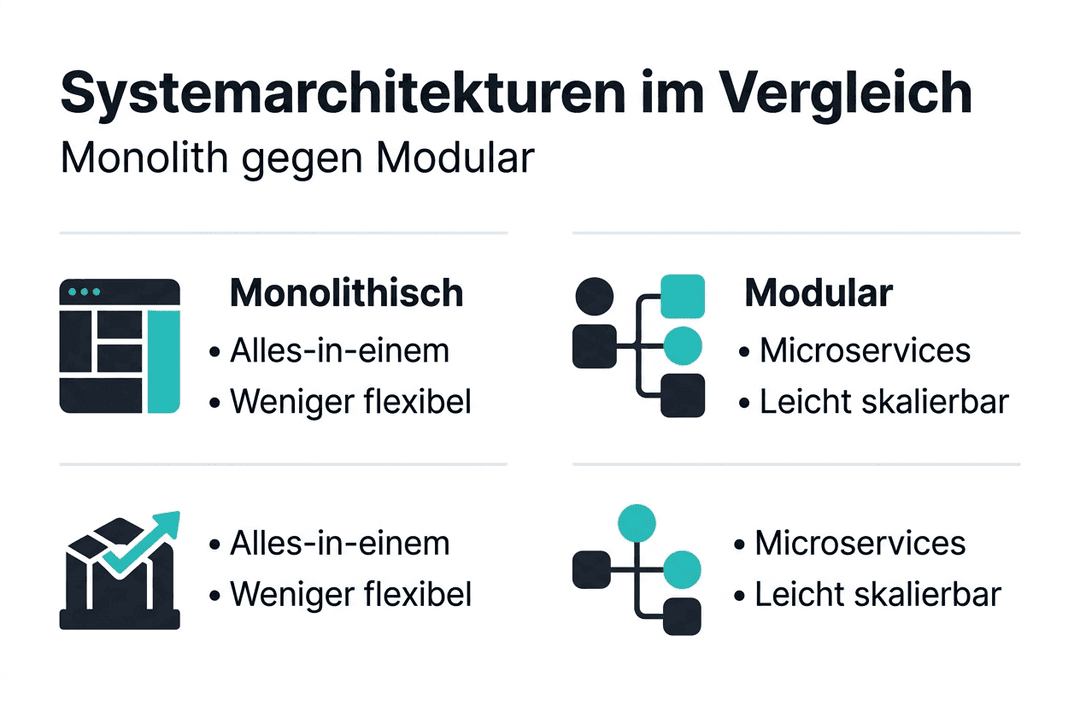
| Architecture type | Scaling | Performance under peak load | Maintainability | Cost |
|---|---|---|---|---|
| Monolithic | Entire system must scale | Prone to bottlenecks | Changes affect everything | Inefficient during peaks |
| Distributed (microservices) | Modules scale independently | Stable through targeted resources | Isolated updates possible | 30% lower with optimization |
| Hybrid | Critical modules distributed | Good with strategic separation | Moderate complexity | Balanced |
Pro tip: When choosing software, explicitly examine the system architecture. Ask vendors about their scaling strategy during high-load periods and request references from events with similar attendee numbers. Performance testing under realistic conditions is essential.
Core components of distributed event systems include central API interfaces for external integrations, temporary storage systems for session data, and asynchronous message queues for time-uncritical processes. This architecture enables efficient event planning even for complex requirements. Load balancers intelligently distribute incoming requests across available server instances.
Caching systems temporarily store frequently accessed data, such as event details or seating charts, cutting database queries by up to 80%. This speeds up load times and reduces infrastructure load. Content delivery networks (CDNs) serve static content like images and videos from geographically nearby servers, which especially improves performance for international events.
In practice: efficient automation and software solutions in event management
Specialized event management software automates the entire value chain, from initial inquiry to follow-up. Modern platforms integrate booking systems, CRM, resource planning, production management, and financial processes into a single central environment. This integration eliminates media breaks and manual data transfers between isolated tools.
Booking automation processes incoming inquiries instantly, checks availability in real time, and creates personalized quotes based on predefined templates. Clients get a response within minutes instead of hours. Automatic reminders and follow-ups boost conversion rates by an average of 25%. Digital staff scheduling automatically factors in qualifications, availability, and legal requirements.
Real-time analytics platforms for ticketing operations demonstrate the potential of distributed architectures. Platform costs for visualization drop by 30% thanks to scalable systems. At the same time, data quality improves because all information is captured and validated centrally. Dashboards show sales figures, attendee demographics, and financial KPIs in real time.
Practical features of modern event management software:
- Automated quote creation with multilingual templates and digital signatures
- Intelligent staff scheduling with shift management and time tracking
- Integrated invoice management with automatic payment reconciliation
- Production lists for kitchen and technical teams with real-time updates
- CRM features for structured client communication across every channel
- Mobile apps for on-site coordination and last-minute adjustments
Event automation boosts efficiency by cutting manual data entry by up to 70%. Error rates drop dramatically, since data only needs to be entered once and is then automatically carried over into every relevant document. This improves not just internal processes but also client satisfaction through consistent, error-free communication.
| Process | Manual duration | Automated duration | Error reduction |
|---|---|---|---|
| Quote creation | 120-180 min | 5-10 min | 85% |
| Event staff scheduling | 60-90 min | 10-15 min | 75% |
| Invoicing | 30-45 min | 2-5 min | 90% |
| Communication updates | 45-60 min | Automatic | 80% |
Successful event planning uses these technologies systematically. Integrated systems create transparency around project status, enable proactive risk management, and support data-driven decisions. Teams work more efficiently when everyone can access the same up-to-date information.
Efficient event planning with Univents software solutions
Modern event managers need a platform that connects every process seamlessly. Univents offers exactly this kind of integrated solution for organizers, caterers, and event venues looking to replace manual workflows with intelligent automation.
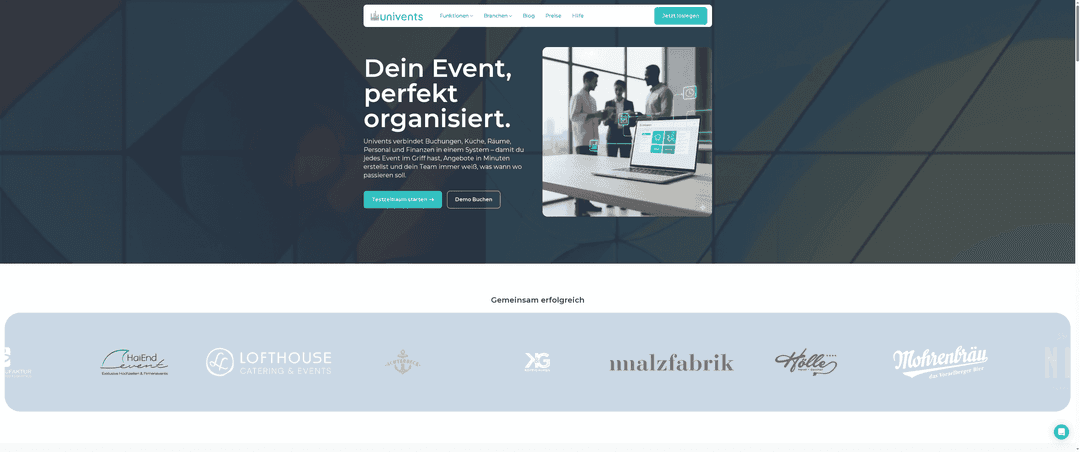
Univents' Event Management Software centralizes booking inquiries, quote creation, resource planning, and financial management in one place. Automated workflows cut your administrative workload by up to 70% and eliminate error sources caused by manual data transfers. The communication hub keeps teams, vendors, and clients in sync in real time across every channel.
The automated booking system processes inquiries around the clock, checks availability instantly, and generates personalized quotes with a digital signature. Your clients get fast, professional responses while you gain time for strategic work. Intelligent staff scheduling, production lists, and integrated financial management round out the ecosystem for efficient event management in 2026.
Frequently asked questions about event management 2026
What are the most important features of event management software?
Modern event management software needs to integrate booking automation, CRM, resource planning, production management, and financial processes. Core features include automated quote creation with digital signatures, intelligent staff scheduling with availability checks, real-time communication across every channel, and integrated invoice management. Mobile access for on-site teams and customizable templates for different event types are essential. Efficiency gains from event automation increase significantly when all features work together seamlessly instead of relying on isolated point solutions.
How does artificial intelligence help with event planning?
AI personalizes attendee experiences by analyzing preferences and behavior, generating individual program recommendations with up to 82% relevance. Intelligent matching algorithms connect attendees with similar interests, boosting high-quality networking contacts by 56%. AI-driven personalization increases attendee engagement by 47%. Predictive analytics forecast visitor numbers, optimize resource allocation, and identify risks early. The impact of AI shows up in measurable improvements in engagement and efficiency.
What are the biggest challenges in event planning in 2026?
Budget control remains critical, since 60% of event managers experience overruns averaging 15%. Unforeseen changes, inefficient communication, and manual calculation errors are the main causes. Technical stability during high-load periods is essential, since monolithic ticketing systems frequently cause performance problems during peak demand. Other challenges include coordinating distributed teams, integrating fragmented tool landscapes, and rising expectations around personalization. Professional event budget planning and robust system architectures minimize these risks.
How can I increase the efficiency of my events?
Use modern, integrated event management software instead of fragmented point tools. Automate recurring tasks such as quote creation, staff scheduling, and communication to save up to 70% of your time. Add AI-powered personalization once you have enough attendee data. Integrated event ecosystems offer a real competitive advantage over isolated solutions. Implement real-time dashboards for data-driven decisions and continuous optimization. Systematic process digitization measurably increases efficiency through event automation.
Recommendation
- Planning Events Efficiently: How Automation Boosts Customer Satisfaction in 2026
- Why Event Automation Is Revolutionizing Efficiency
- Types of Event Management: Planning and Automation in 2026
- Event Execution Best Practices: Planning Efficiently in 2026
- Sales Process Automation Steps: 73% More Leads in 2026
- Creative party photo booth tips for 2026 events
See how Univents works specifically for your industry – with all features, examples and pricing at a glance.
Event Agency Software